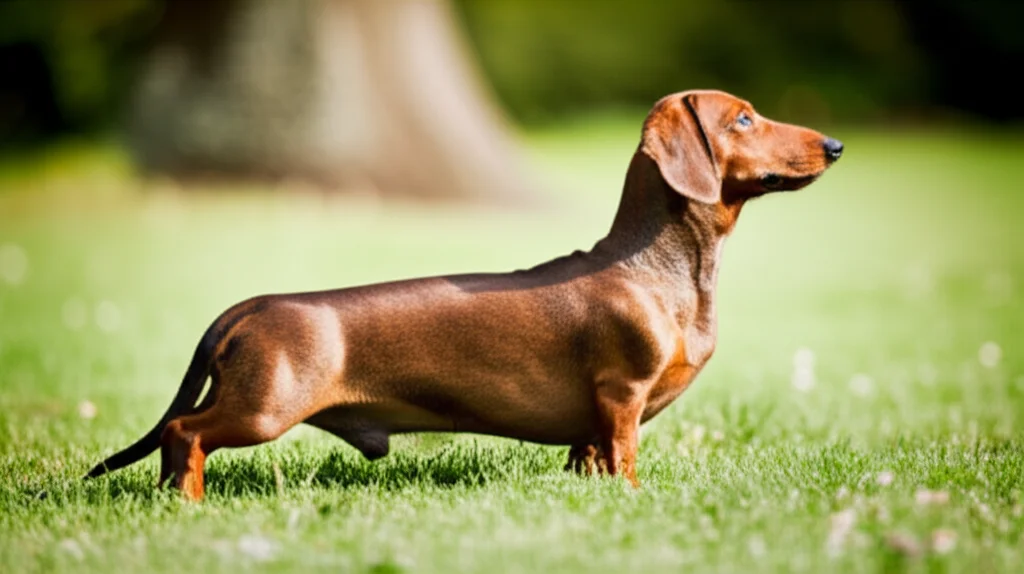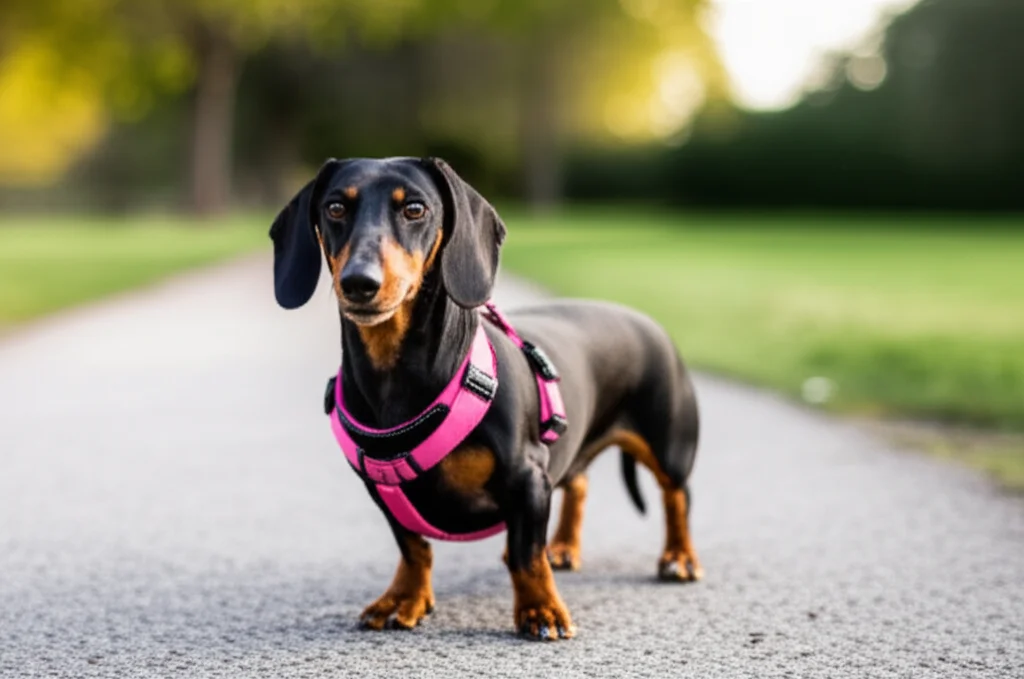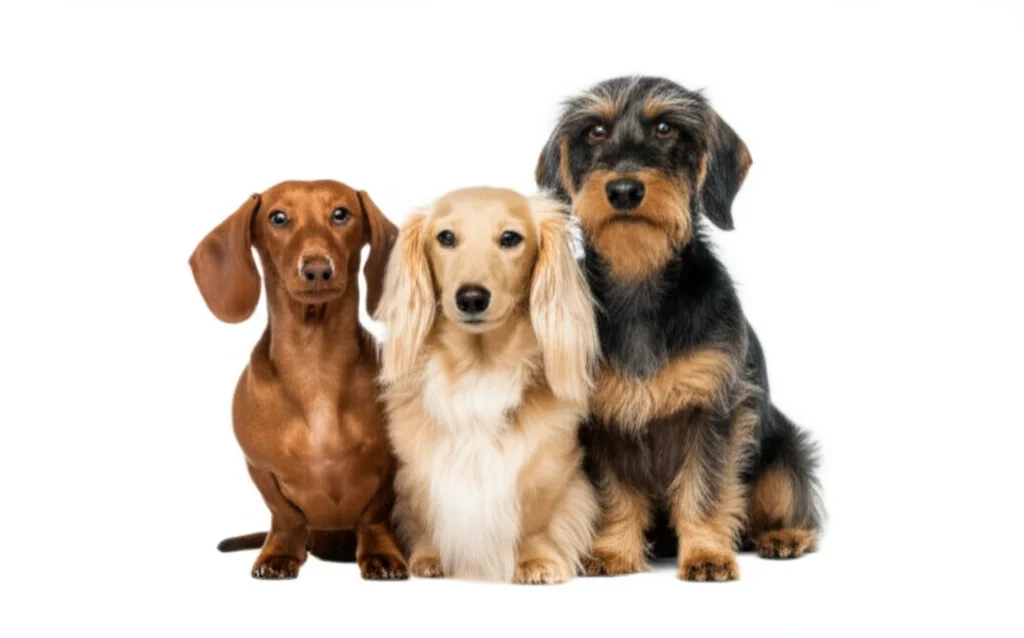
The dachshund is one of the most distinctive dog breeds in the world, and it's far more diverse than most people realize. With three recognized sizes and three coat types, there are nine unique combinations of dachshund — each with its own personality quirks, grooming needs, and physical characteristics.
Whether you're a first-time dachshund owner or a seasoned enthusiast, this comprehensive guide will help you understand every variety of this beloved breed.
The Classification System
Dachshunds are classified along two axes:
Size (determined by chest circumference at 15 months):
| Size | Chest Circumference | Typical Weight |
|---|---|---|
| Standard | Over 35 cm (14 in) | 16–32 lbs |
| Miniature | 30–35 cm (12–14 in) | 8–11 lbs |
| Kaninchen | Under 30 cm (12 in) | 6–8 lbs |
Coat Type:
| Type | Characteristics |
|---|---|
| Smooth (Kurzhaar) | Short, sleek, glossy |
| Long-haired (Langhaar) | Soft, silky, flowing |
| Wire-haired (Rauhhaar) | Rough, dense, bristly |
Three Sizes Explained
Standard Dachshund
The original dachshund was bred in Germany to hunt badgers — in fact, "dachshund" literally means "badger dog." Standards are the largest variety and retain the strongest hunting instincts.
Physical traits:
- Robust, muscular build
- Deep chest with prominent keel
- Strong, paddle-shaped paws for digging
Temperament:
- Bold and confident
- High prey drive
- Loyal to family but can be reserved with strangers
- Requires firm, consistent training
Best for: Active owners with space for a larger dachshund. Excellent for families who enjoy outdoor activities.
Miniature Dachshund
Developed to hunt smaller game like rabbits, the miniature is the world's most popular dachshund size and the variety most people picture when they hear "dachshund."
Physical traits:
- Compact but well-proportioned
- Slightly finer bone structure than standards
- Deep chest relative to body size
Temperament:
- Affectionate and people-oriented
- Playful and sometimes clownish
- Can be stubborn but responds well to positive reinforcement
- Generally good with children (with supervision)
Best for: Apartment dwellers, families, and first-time dachshund owners. Versatile and adaptable.
Kaninchen Dachshund
The smallest variety, whose name comes from the German word for "rabbit." Recognized by the FCI (Federation Cynologique Internationale) but classified under miniature by the AKC.
Physical traits:
- Delicate, fine-boned frame
- Smallest chest circumference of all varieties
- Lightweight enough to carry easily
Temperament:
- Very attached to their owner
- Can be more anxious than larger varieties
- Tends to be shy around strangers
- Sweet and gentle nature
Best for: Owners who want a tiny companion dog. Ideal for smaller living spaces and those who travel frequently.
Important note: Due to their tiny size, kaninchen dachshunds are more fragile and prone to hypoglycemia in puppyhood. They need careful handling, especially around children.
Three Coat Types Explained
Smooth-Haired Dachshund
The original coat type, and the most recognizable dachshund look.
Coat characteristics:
- Short, dense, and glossy
- Lies flat against the body
- Slightly harsh to the touch
- No feathering or long hair anywhere
Grooming needs:
- Minimal — weekly brushing sufficient
- Bath monthly or as needed
- Sheds moderately, more during seasonal changes
Temperament tendencies: Smooth dachshunds tend to be the most terrier-like of the three coat types. They're often described as bold, curious, and somewhat stubborn. They can be vocal and make excellent watchdogs.
Popular colors: Red, black and tan, chocolate and tan, dapple.
Long-Haired Dachshund
Created by crossing smooth dachshunds with spaniels (likely the English Cocker Spaniel), the long-haired variety has the most glamorous appearance.
Coat characteristics:
- Long, silky, slightly wavy fur
- Feathering on ears, chest, legs, and tail
- Soft, luxurious texture
- Double coat with a fine undercoat
Grooming needs:
- Daily brushing to prevent tangles and mats
- Regular ear cleaning (the long ear flaps trap moisture)
- Occasional trimming of foot fur
- Professional grooming every 2–3 months recommended
Temperament tendencies: Long-haired dachshunds are generally the most gentle and docile of the three coat types. The spaniel influence shows in their calm demeanor and eager-to-please attitude. They tend to be:
- Quieter than smooth or wire varieties
- More relaxed and easygoing
- Particularly affectionate with family members
- Good with other pets
Popular colors: Cream, shaded red, black and cream.
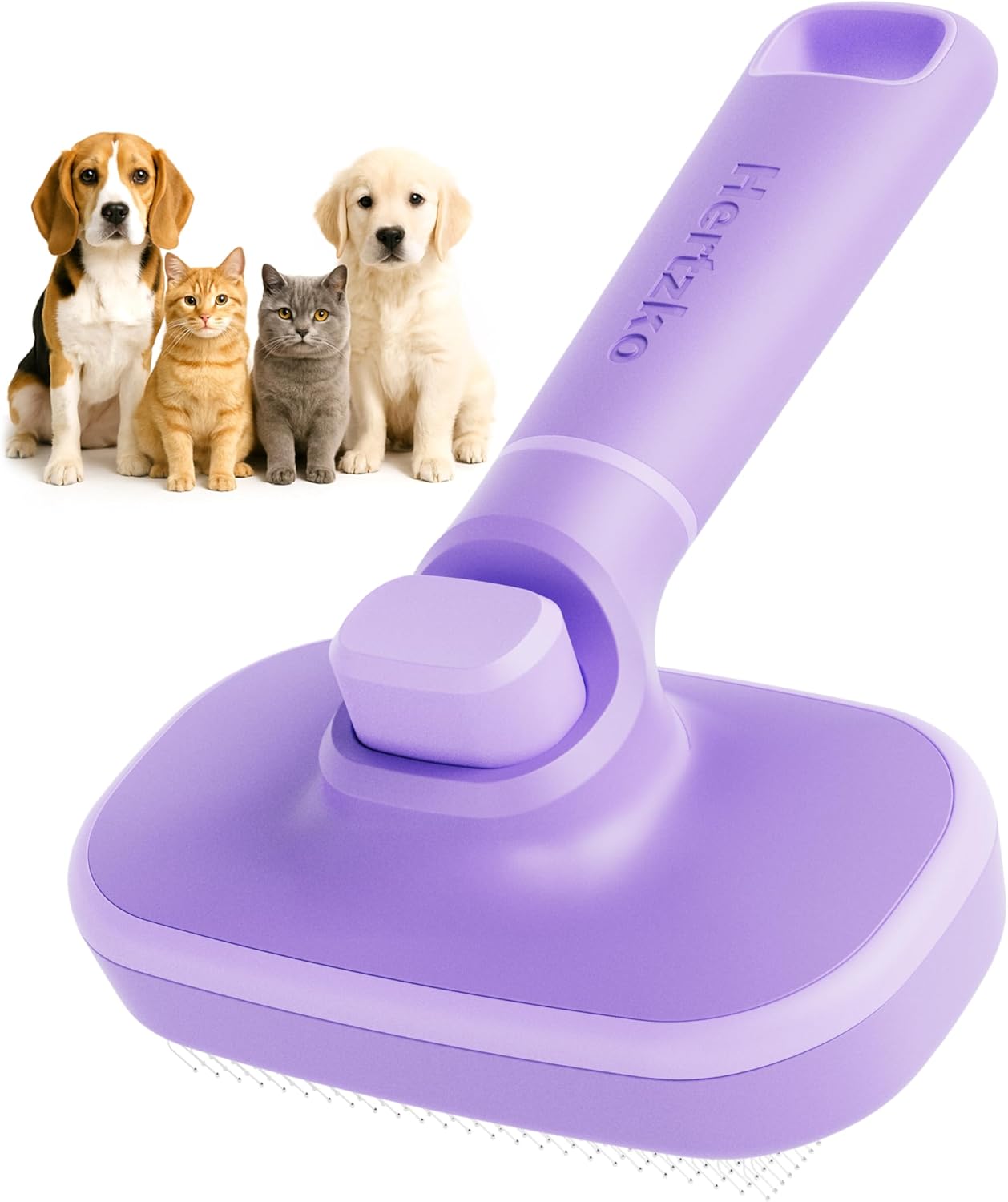
Hertzko Self-Cleaning Slicker Brush
An essential grooming tool for long-haired dachshunds. The fine, angled bristles gently remove tangles, mats, and loose fur without irritating the skin. The self-cleaning retractable bristle design makes cleanup effortless.
Wire-Haired Dachshund
The result of crossing dachshunds with wire-haired terrier breeds, this variety has a distinctive bearded, scruffy appearance.
Coat characteristics:
- Dense, rough outer coat
- Soft, thick undercoat
- Prominent eyebrows, beard, and mustache
- Gives a "wise old man" appearance
Grooming needs:
- Brush 2–3 times per week
- Professional hand-stripping 2–3 times per year to maintain coat texture
- Clipping is easier but softens the coat over time
- Beard may need regular cleaning after meals
Temperament tendencies: Wire-haired dachshunds bring terrier energy to the dachshund personality. They are:
- The most energetic and playful of the three types
- Confident and outgoing
- Known for their comedic personalities
- May be more independent and strong-willed
- Excellent for active families
Popular colors: Wild boar (a unique grizzled mix), wheaten, black and tan.

Mars Coat King Stripping Knife for Terriers
A professional-grade stripping knife ideal for maintaining the wire-haired dachshund's characteristic rough coat texture. Regular hand-stripping with this tool removes dead outer coat while preserving the dense, weather-resistant undercoat.
Color and Pattern Varieties
Dachshunds have one of the most diverse color palettes of any dog breed.
Solid Colors
- Red: Ranges from golden to deep mahogany. The most common color
- Cream: Pale, almost white. Common in long-haired varieties
Two-Tone (Bicolor)
- Black and tan: Classic combination with tan markings on eyebrows, muzzle, chest, legs, and under the tail
- Chocolate and tan: Rich brown base with lighter tan points
- Blue and tan: Diluted black creating a steel-gray appearance (relatively rare)
- Isabella and tan: Diluted chocolate, creating a lilac/fawn color (rare)
Patterns
- Dapple (Merle): Random splotches of lighter color over a darker base. Beautiful but carries health concerns when double-dappled
- Brindle: Tiger-stripe pattern overlaid on any base color
- Piebald: Large white patches with colored areas
- Sable: Red hairs tipped with black, creating a shaded effect
A Note on Double Dapple
Breeding two dapple dachshunds together is strongly discouraged. Double dapple puppies have a high incidence of:
- Blindness or microphthalmia (abnormally small eyes)
- Deafness
- Missing or malformed eyes
- Other congenital defects
Responsible breeders will never produce double dapple litters. If you're buying a dapple dachshund, ensure only one parent carries the merle gene.
Which Type Is Right for You?
| Your Lifestyle | Recommended Type |
|---|---|
| First-time dog owner | Miniature Long-haired |
| Low-maintenance grooming | Any size, Smooth coat |
| Active outdoor lifestyle | Standard, Wire-haired |
| Small apartment | Miniature or Kaninchen |
| Families with kids | Miniature Long-haired |
| Want a unique look | Wire-haired |
| Experienced dog owner | Standard Wire-haired |
FAQ
Are male or female dachshunds better?
Both sexes make wonderful pets. Males tend to be slightly more laid-back and attention-seeking, while females can be more independent and easier to train. The differences are subtle and individual personality matters more than sex.
Can different types of dachshunds live together?
Absolutely. Dachshunds generally get along well with other dachshunds, regardless of size or coat type. Just be mindful of size differences — a standard and a kaninchen should be supervised during play.
Do wire-haired dachshunds shed less?
Wire-haired dachshunds do shed, but the rough outer coat traps loose hair more than smooth coats. Regular stripping removes dead coat and reduces shedding around the home.
Why is my "miniature" dachshund so big?
Size classification is based on chest circumference, not weight. Some miniature dachshunds are bred from larger parents and may exceed the typical weight range while still having the correct chest measurement. Overfeeding during puppyhood can also lead to a larger adult size.
Conclusion
The dachshund's nine varieties ensure there's a perfect match for almost every dog lover. From the bold standard smooth to the gentle miniature long-hair to the spirited kaninchen wire-hair, each combination brings its own blend of personality, beauty, and character. Take time to research the specific type that aligns with your lifestyle, and you'll be rewarded with one of the most loyal, entertaining, and endearing companions in the dog world.