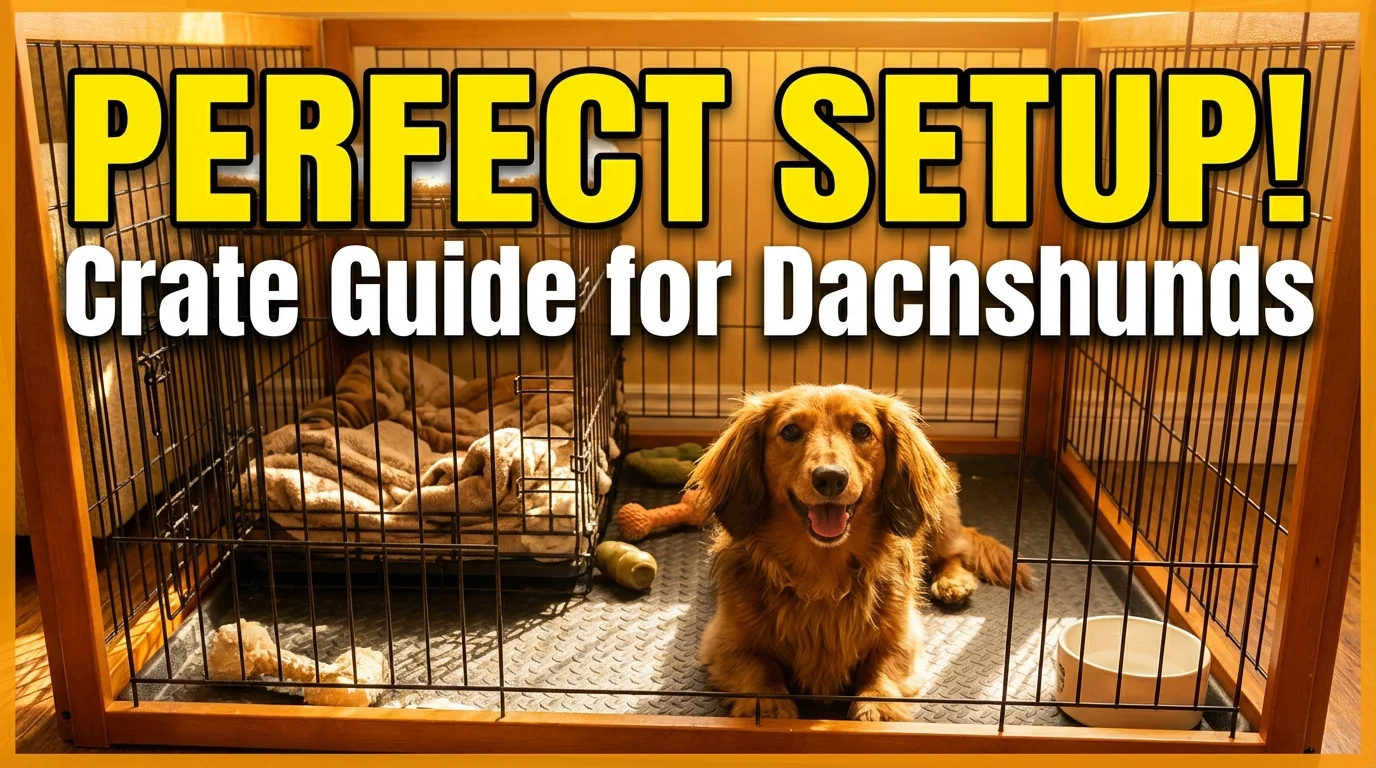
Bringing a Dachshund into your home is an exciting experience, but one of the first and most critical decisions you will make is choosing the right crate or playpen. The indoor environment where your dog spends the majority of their time directly impacts their physical and mental well-being.
Due to their unique long-backed and short-legged anatomy, selecting a standard crate or playpen without considering their specific needs can inadvertently increase the risk of accidents and Intervertebral Disc Disease (IVDD).
In this comprehensive guide, we will explore how to select the perfect crate and playpen for your Dachshund, how to create a comfortable sleeping area, and how to ensure their safety when left home alone, all from a veterinary and behavioral perspective.
Do Dachshunds Really Need a Crate or Playpen?
Many owners wonder if it is better to let their dogs roam freely around the house. However, having a dedicated, secure space is essential for a dog's well-being.
Providing a Safe "Den"
Dogs are naturally den animals that seek out small, enclosed, and dimly lit spaces when they need to rest. A crate serves as a safe haven that blocks out excessive external stimuli. Having a secure retreat is especially important during stressful events like thunderstorms, fireworks, or when unfamiliar guests visit, significantly reducing their anxiety.
Ensuring Safety While Home Alone
Allowing a Dachshund to roam freely when unsupervised increases the risk of accidents such as chewing on electrical cords, ingesting toxic items, or jumping off furniture. Dachshunds are notoriously curious and skilled at squeezing into tight spaces. Keeping them in a secure playpen while you are away is a fundamental safety measure.
Preparation for Emergencies
In the event of a natural disaster or emergency evacuation, dogs are often required to stay in crates at shelters. If your dog is not accustomed to a crate, being confined in a high-stress environment can cause severe panic. Crate training is an essential life skill that prepares them for unexpected situations.
3 Key Factors When Choosing a Playpen for a Dachshund
When selecting a playpen, you must consider the Dachshund's unique physical traits and behaviors. Keep these three crucial points in mind:
1. Sufficient Height to Prevent Neck Injuries
Although Dachshunds are short in stature, they frequently attempt to stand on their hind legs. While this behavior should be discouraged to protect their spine, it is inevitable that they will try.
If the playpen or crate ceiling is too low, they risk bumping their heads when they stand up, which can cause severe cervical spine injuries. Always choose a playpen with sufficient height—typically 24 inches (60 cm) or taller—so that your dog's head does not touch the top even when fully extended on their hind legs.
2. Adequate Space to Separate the Bed and Toilet
Dogs are inherently clean animals and detest sleeping near their waste. Therefore, a playpen must be spacious enough to clearly separate the sleeping area from the potty area.
For a Miniature Dachshund, a playpen measuring approximately 48 inches by 24 inches (120 cm x 60 cm) is ideal. This size allows you to place a crate (for sleeping) on one side and a potty tray on the opposite side, creating a hygienic and stress-free environment.
3. A Roof or Cover to Prevent Jumping Out
Dachshunds have a hunting dog lineage, meaning they are surprisingly athletic and capable of jumping. If a playpen does not have a roof, a dog left alone may try to escape, risking getting their paws caught in the wire or suffering a severe spinal injury upon landing.
Given their high susceptibility to IVDD, jumping and hard landings must be strictly avoided. Always opt for a playpen that includes a secure roof or mesh cover to prevent escape attempts.
Setting Up a Comfortable and Safe Indoor Environment
Once you have selected the right crate and playpen, the next step is optimizing the interior setup.
Use a Crate as the Primary Bed
Instead of placing an open bed directly inside the playpen, place a hard-sided plastic crate inside the pen and leave its door open. Plastic crates provide excellent insulation and mimic the enclosed den environment that dogs naturally crave. Furthermore, if your dog is accustomed to sleeping in a plastic crate, traveling in the car or staying at a vet clinic will be much less stressful for them.
Install Non-Slip Flooring
If the floor of the playpen is a slippery surface like hardwood, your dog will strain their joints and back every time they stand up or walk. It is imperative to cover the playpen floor with non-slip mats or washable carpet tiles. Avoid overly plush or thick cushions, as they can be difficult to walk on; instead, choose a firm material that provides traction without catching their nails.
Temperature and Humidity Control
Dachshunds are generally sensitive to the cold. Avoid placing the crate or playpen in direct sunlight, directly under an air conditioning vent, or near drafty doors. The ideal indoor temperature is between 68°F and 77°F (20°C - 25°C), with a humidity level of 50% to 60%. During the winter months, consider adding a pet-safe heating pad inside the crate to keep them warm.
FAQ: Common Questions About Crates and Playpens
Q: Should my Dachshund sleep in a crate at night? A: Yes, it is highly recommended that your dog sleeps in their crate at night. Sleeping in your bed poses significant risks; your dog might jump off the bed and injure their back, or you might accidentally roll over and injure them during the night.
Q: My dog barks constantly when left alone in the playpen. What should I do? A: Continuous barking usually indicates that the dog has a negative association with the playpen or is experiencing separation anxiety. You need to restart crate training from the beginning. Spend time with your dog while they are in the playpen while you are home, offering treats and praise so they learn that the playpen is a safe, positive, and relaxing space.
Q: My dog keeps having potty accidents in their bed. How can I stop this? A: This usually happens if the playpen is too small, forcing the bed and potty pad too close together, or if the potty pad is not changed frequently enough. Ensure the playpen is large enough (at least 48 inches long) and keep the potty area impeccably clean. Also, thoroughly wash all bedding to remove any lingering urine odors, as dogs will often soil areas that already smell like waste.
Conclusion
Creating a safe, comfortable, and anatomically appropriate indoor environment is one of the most important steps in ensuring a long, healthy life for your Dachshund.
- Choose a height that prevents head-bumping when standing.
- Ensure enough space (at least 48 inches long) to separate the bed and toilet.
- Always use a roof or cover to prevent jumping and escape attempts.
- Install non-slip flooring to protect their delicate spine and joints.
By following these guidelines, you can significantly reduce the risk of household accidents and IVDD. Provide your Dachshund with their very own "safe castle" where they can truly relax and thrive.