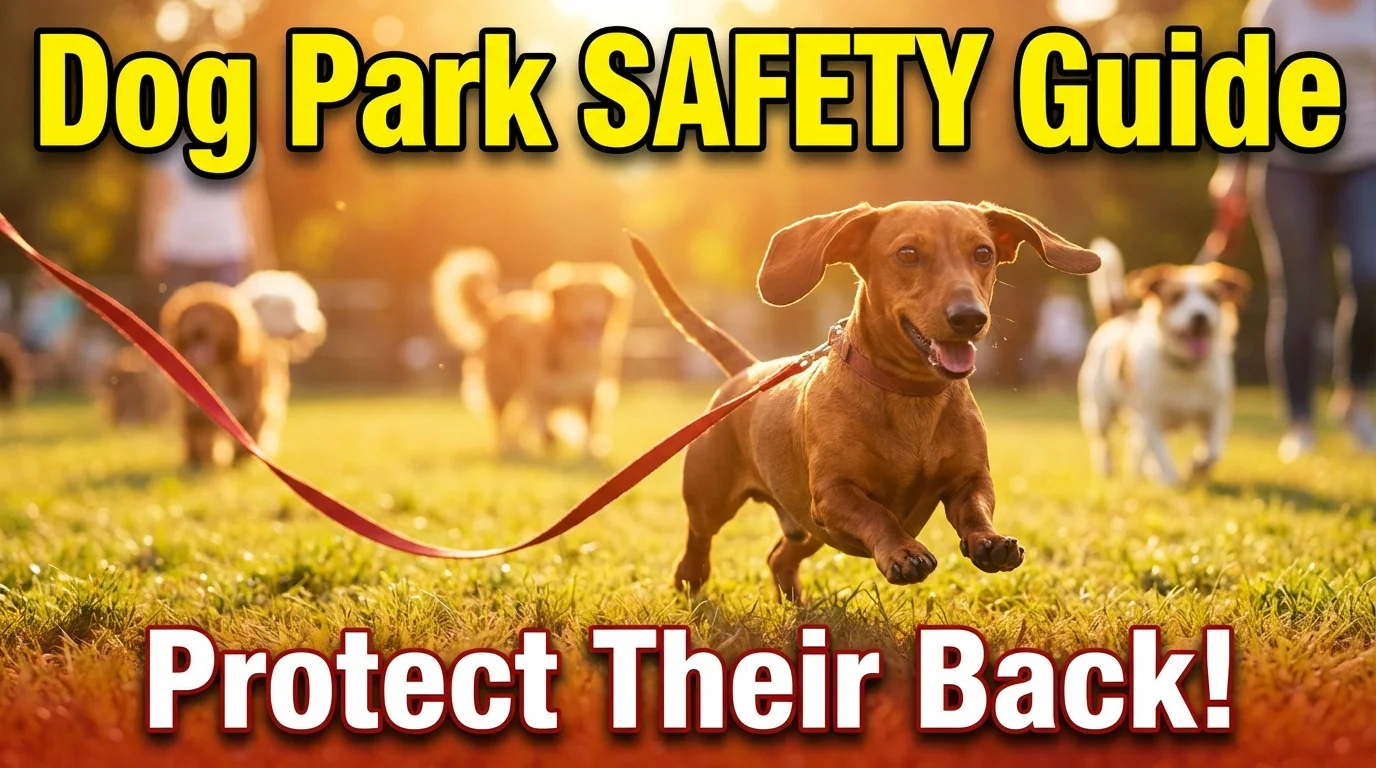
As the weather warms up, many Dachshund owners are eager to let their dogs run free at the local dog park. Originally bred as badger hunters, Dachshunds are highly active and energetic dogs that thrive on outdoor exploration. A trip to the dog park or a large open field using a long training leash can be an excellent way to burn off excess energy, provide mental stimulation, and prevent behavioral issues.
However, the unique anatomy of a Dachshund—their long spine and short legs—makes them particularly vulnerable to Intervertebral Disc Disease (IVDD). Sudden stops, sharp turns, and rough play with larger dogs can put immense strain on their delicate backs. Furthermore, their strong prey drive can sometimes lead to inappropriate chasing behaviors. This guide, based on veterinary and behavioral science, will explain how to safely introduce your Dachshund to the dog park and how to utilize long leashes for safe, controlled exercise.
Essential Preparations Before the Dog Park
A dog park is a dynamic and sometimes unpredictable environment. To ensure the safety of your Dachshund and other dogs, thorough preparation is crucial before you even step through the gates.
1. Up-to-Date Vaccinations and Health Checks
Before visiting any public dog area, ensure your Dachshund is fully vaccinated, particularly against Rabies, Parvovirus, Distemper, and Bordetella. Springtime also brings an increased risk of fleas and ticks, so up-to-date preventative medications are mandatory. If your Dachshund is older or has a history of back issues, consult your veterinarian for a physical exam to confirm they are cleared for vigorous exercise.
2. Mastering Basic Obedience (The Recall)
The most critical command your dog must know before being let off-leash is a reliable recall ("come"). Dachshunds are scent hounds; once their nose hits an interesting trail, they can develop "selective hearing." Practice recall extensively in low-distraction environments (like your living room or a quiet yard) before attempting it at a stimulating dog park. A solid "leave it" and "sit" command are also essential for diffusing tense situations.
3. Assessing Socialization Levels
Understand your Dachshund's personality. Are they confident, fearful, or overly dominant? If your dog is under-socialized and reacts fearfully or aggressively to unfamiliar dogs, a busy dog park is not the place to start. Begin with structured, one-on-one playdates with calm, well-mannered dogs of a similar size to build their confidence gradually.
Safety Guidelines for Dachshunds at the Dog Park
When you arrive at the park, your primary focus must be protecting your Dachshund's back and managing their interactions with other dogs.
Protecting the Spine from IVDD Risks
The primary concern for any Dachshund owner is IVDD. The biomechanics of a Dachshund running at full speed and making a sudden, sharp turn to chase another dog places extreme torsional stress on their intervertebral discs.
- Avoid Roughhousing: Do not allow your Dachshund to engage in rough wrestling or be jumped on by other dogs.
- Monitor Play Styles: If the play escalates from a gentle trot to high-speed, erratic sprinting, intervene immediately. Call your dog back for a brief "time-out" to lower their arousal levels.
- Choose Flat Terrain: Opt for parks with flat, grassy surfaces. Avoid parks with steep hills, deep holes, or agility equipment (like high jumps) that could cause a spinal injury.
The Danger of Size Disparities
Never take a Dachshund into the "Large Dog" section of a park. Even if a large dog is friendly, an accidental collision or a misplaced paw during play can cause catastrophic injuries to a Dachshund's back or legs. Always utilize the designated "Small Dog" area, and remain vigilant even there, as some small terriers can play too roughly for a long-backed breed.
Managing the Prey Drive
Dachshunds were bred to chase and dig. If they see a smaller dog running, their instinct may be to chase it relentlessly. While some chasing is normal play, it can quickly cross the line into predatory drift, terrifying the other dog. If your Dachshund is hyper-fixated on chasing and ignoring your recall commands, it is time to leave the park.
The Alternative: Safe Exercise with a Long Leash
If your local dog park is too crowded, lacks a small dog area, or if your Dachshund's recall isn't perfect yet, a long training leash (15 to 30 feet) in a quiet, open field is an outstanding alternative.
Benefits of Long Leash Training
A long leash provides the illusion of freedom while maintaining absolute safety. It allows your Dachshund to engage in natural behaviors—like extensive sniffing and exploring—at their own pace, which is incredibly mentally enriching. It is also the safest tool for practicing recall in a realistic outdoor setting.
Crucial Rules for Long Leash Use
- Always Use a Harness: Never attach a long leash to a collar. If your Dachshund sprints after a squirrel and hits the end of a 30-foot line, the sudden jerk on a collar can cause severe tracheal collapse or cervical spine injuries. A well-fitted, Y-shaped harness distributes the force safely across their chest.
- Mind the Slack: As the handler, you must actively manage the leash. Do not let it drag excessively on the ground where it can tangle around your dog's short legs or trip another person. Practice reeling it in and letting it out smoothly.
- Choose the Right Environment: Use long leashes in wide-open spaces free of trees, bushes, or other dogs where the line could become snagged.
Frequently Asked Questions (FAQ)
Q. My Dachshund barks non-stop at the dog park fence. What should I do? A. This is often barrier frustration or over-arousal. Do not immediately let them off the leash. Walk them parallel to the fence at a distance where they remain calm, rewarding quiet behavior. Only enter the park when they are relaxed. If they cannot calm down, it's best to try again another day or opt for a quiet walk instead.
Q. Are retractable leashes safe for Dachshunds? A. Veterinarians and trainers generally advise against retractable leashes. They maintain constant tension, which encourages pulling. More importantly, the thin cord can cause severe friction burns to humans and dogs, and the bulky handle, if dropped, can terrify a dog, causing them to bolt into danger. A standard webbed or biothane long line is much safer.
Q. At what age can I take my Dachshund puppy to the dog park? A. Wait until your puppy has completed their full series of core vaccinations (usually around 16 weeks of age) and your vet has given the all-clear. However, because their growth plates are still open, their exercise must be strictly limited. Focus on positive socialization rather than physical exertion.
Conclusion
A trip to the dog park or an open field can be the highlight of your Dachshund's week, providing vital physical exercise and mental stimulation. However, their unique physical structure demands that owners remain hyper-vigilant. By prioritizing IVDD prevention, utilizing safe equipment like harnesses and long lines, and advocating for your dog in group settings, you can ensure they enjoy the great outdoors safely for years to come.