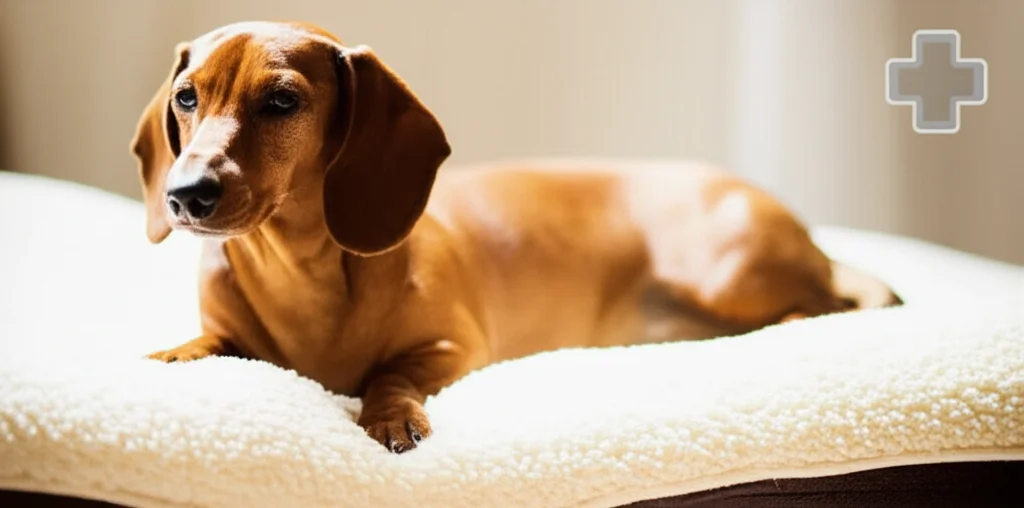
If you share your life with a dachshund, you have probably heard of IVDD, or Intervertebral Disc Disease. It is the single most feared health condition among dachshund owners, and for good reason. Studies published in the Journal of Veterinary Internal Medicine estimate that one in four dachshunds will experience some degree of disc disease during their lifetime, making the breed disproportionately affected compared to nearly every other dog breed. The good news is that a combination of smart lifestyle adjustments, early detection, and modern veterinary medicine can dramatically improve outcomes. This comprehensive guide walks you through everything you need to know, from the underlying anatomy to practical prevention steps you can start today.
What Is IVDD and Why Are Dachshunds So Vulnerable?
Intervertebral Disc Disease refers to the degeneration, herniation, or rupture of the cushioning discs that sit between the vertebrae of a dog's spinal column. These discs act as shock absorbers, allowing the spine to flex and move comfortably. When a disc deteriorates, the inner gel-like material (nucleus pulposus) can push outward and compress the spinal cord or the nerves branching off it.
Dachshunds are classified as a chondrodystrophic breed, meaning they were selectively bred for a form of dwarfism that gives them their characteristically short legs and elongated torso. This same genetic trait causes their intervertebral discs to undergo premature calcification and degeneration, a process that can begin as early as two years of age. While most large-breed dogs experience age-related disc problems later in life (Hansen Type II), dachshunds are prone to the more acute and sudden Hansen Type I disc herniation, where the hardened disc material explosively herniates into the spinal canal.
The long spine, combined with relatively short rib cages and minimal muscular support along the back, creates biomechanical stress that further predisposes dachshunds to disc problems. This is not a question of if the discs will degenerate, but rather how severe the consequences will be and what you can do to minimize risk.
Recognizing IVDD Symptoms: The Five Grades
Early detection is arguably the single most important factor in achieving a positive outcome. IVDD is typically graded on a scale from I to V based on severity.
Grade I: Pain Only
The dog shows signs of back or neck pain without any neurological deficits. You may notice reluctance to jump, a hunched posture, shivering, crying out when picked up, or a sudden unwillingness to climb stairs. Many owners mistake this for a pulled muscle. Grade I is the most treatable stage and has the best prognosis.
Grade II: Wobbly Walking (Ataxia)
The dog can still walk but shows an uncoordinated or wobbly gait, particularly in the hind legs. The dog may cross its back legs, scuff its nails on the ground, or sway from side to side. This indicates that the spinal cord is being compressed enough to interfere with nerve signal transmission.
Grade III: Severe Weakness (Paresis)
The dog retains some voluntary movement in the hind legs but cannot support its own weight to walk. It may be able to move its legs when lying on its side but cannot stand. This grade represents significant spinal cord compression.
Grade IV: Paralysis with Deep Pain Sensation
The dog has lost the ability to move its hind legs voluntarily but can still feel a firm pinch on the toes of the hind feet (deep pain perception). The presence of deep pain is a critically important prognostic indicator because it means the innermost spinal cord pathways are still intact.
Grade V: Paralysis without Deep Pain Sensation
This is the most severe grade. The dog has no voluntary movement and no deep pain perception in the hind limbs. This indicates severe spinal cord damage. If deep pain has been absent for more than 24 to 48 hours, the prognosis for recovery becomes significantly guarded, though not impossible.
Key takeaway: If you notice any of these symptoms, particularly a sudden onset, contact your veterinarian immediately. Hours matter in IVDD cases.
Prevention Strategies That Actually Work
While you cannot change your dachshund's genetics, you can significantly reduce the mechanical forces and lifestyle factors that trigger disc herniation.
Maintain a Healthy Weight
Excess body weight places additional compressive load on the spinal column with every step your dachshund takes. A study from the Royal Veterinary College found that overweight dachshunds had a statistically higher incidence of IVDD compared to dogs maintained at an ideal body condition score. Your dachshund should have a visible waist when viewed from above and you should be able to feel (but not prominently see) the ribs.
Eliminate Jumping and High-Impact Activities
Jumping on and off furniture is one of the most commonly cited triggers for acute disc herniation. The landing impact sends a shockwave through the spine that can cause an already-weakened disc to rupture. Dog ramps or pet stairs placed next to beds, couches, and cars are essential equipment in any dachshund household.

PetSafe CozyUp Dog Ramp for Couch
A sturdy, non-slip ramp that helps your dachshund safely access couches and beds without jumping. Reduces spinal impact and is essential IVDD prevention equipment.
Support the Spine When Handling
Always pick up your dachshund by supporting both the chest and the hindquarters simultaneously, keeping the spine level. Never lift a dachshund with one hand under the belly or allow the body to dangle. Teach all family members and visitors the correct handling technique.
Build Core and Back Muscle Strength
Controlled, regular exercise builds the paravertebral muscles that support the spine. Leash walking on flat terrain, gentle swimming, and canine-specific balance exercises (such as standing on a wobble board) are excellent choices. Avoid activities that involve twisting, sudden direction changes, or repetitive high impact, such as catching frisbees mid-air.
Consider Joint Supplements
Glucosamine, chondroitin, and omega-3 fatty acid supplements may help support disc and joint health, although the direct evidence for disc disease prevention is still emerging. Many veterinarians recommend starting supplementation early as a proactive measure, particularly for high-risk breeds.

Doggie Dailies Glucosamine for Dogs
Soft chew supplement with glucosamine, chondroitin, MSM, and CoQ10 to support joint health and mobility. A proactive addition to your dachshund's daily routine.
Avoid Slippery Floors
Slippery hardwood or tile floors force your dachshund to constantly brace and compensate, creating abnormal forces along the spine. Use non-slip rugs, yoga mats, or paw wax to provide traction in high-traffic areas.
Use a Harness Instead of a Collar
A collar concentrates pulling force on the neck, which can stress the cervical discs. A well-fitted harness distributes force across the chest and shoulders, protecting both the neck and the thoracolumbar spine.
Treatment Options: From Conservative to Surgical
The appropriate treatment depends on the grade of IVDD, the speed of onset, and the individual dog's overall health.
Conservative (Non-Surgical) Management
For Grade I and some Grade II cases, strict crate rest for four to six weeks is the foundation of conservative treatment. The dog should be confined to a small crate or pen, taken out only for brief, leashed bathroom breaks. This allows the herniated disc material to stabilize and the inflammation around the spinal cord to subside.
Pain management typically includes a combination of non-steroidal anti-inflammatory drugs (NSAIDs), gabapentin for neuropathic pain, and muscle relaxants such as methocarbamol. Some veterinarians prescribe a short course of corticosteroids, though this approach is more controversial due to potential side effects.
Surgical Intervention
For Grade III through V cases, or for Grade II cases that fail to improve with conservative management, surgery is generally recommended. The most common procedure is a hemilaminectomy, in which the surgeon removes a portion of the vertebral bone to access and remove the herniated disc material compressing the spinal cord.
Surgery is most successful when performed within 24 to 48 hours of symptom onset, particularly for Grade IV and V cases. Success rates for dogs with intact deep pain perception (Grades I through IV) are generally reported between 85 and 95 percent. For Grade V cases without deep pain, surgical success rates drop to approximately 50 to 60 percent, though recent studies suggest that even some Grade V dogs can recover with aggressive surgical intervention.
Advanced imaging, specifically MRI, is the gold standard for diagnosing the exact location and severity of disc herniation before surgery. CT scans are also used and can be performed more quickly, which is important when time is critical.
Rehabilitation and Physical Therapy
Post-treatment rehabilitation is increasingly recognized as a vital part of IVDD recovery. Canine rehabilitation may include hydrotherapy (underwater treadmill or swimming), laser therapy, acupuncture, electrical stimulation, and targeted therapeutic exercises. A certified canine rehabilitation therapist can design a program tailored to your dog's specific needs and recovery stage.
Recovery Timeline: What to Expect
Recovery from IVDD varies widely depending on the severity and the treatment approach.
- Grade I (conservative): Most dogs show significant improvement within one to two weeks, with full recovery expected by four to six weeks of strict rest.
- Grade II (conservative or surgical): Recovery may take four to eight weeks. Some dogs experience lingering wobbliness that gradually resolves over several months.
- Grade III (usually surgical): Walking ability typically returns within two to six weeks post-surgery, with continued improvement over three to six months.
- Grade IV (surgical): Recovery to functional walking may take two to three months, sometimes longer. Full recovery of normal gait may not be achieved in all cases.
- Grade V (surgical): If recovery occurs, it often takes three to six months or longer. Some dogs regain the ability to walk; others may need long-term mobility assistance such as a wheelchair.
It is important to understand that even after successful treatment, the affected disc and potentially other discs remain vulnerable. Lifelong management, including the prevention strategies outlined above, is essential to minimize the risk of recurrence.
The Role of Genetics and Screening
Research into the genetic basis of IVDD in dachshunds has advanced significantly. A major gene associated with chondrodystrophy and IVDD susceptibility has been identified (FGF4 retrogene insertion on chromosome 12). Genetic testing is now available, though because virtually all dachshunds carry this gene variant, the test is more useful for breeding decisions than for individual risk prediction.
Some European breed clubs have introduced spinal radiograph screening programs where breeding dogs are X-rayed to assess the number of calcified discs. Dogs with fewer calcified discs at a young age tend to produce offspring with less disc calcification. While this screening is not yet widespread, it represents a promising approach to reducing IVDD prevalence through responsible breeding.
Living with a Dachshund After IVDD
Many dachshunds recover from IVDD episodes and go on to live full, happy lives. However, management becomes a permanent part of your routine. Your home should be set up with ramps, non-slip surfaces, and restricted access to furniture heights. Regular veterinary checkups should include a neurological assessment. Keep your dachshund at an ideal weight, provide consistent low-impact exercise, and remain vigilant for any subtle changes in gait or behavior.
For dogs with permanent mobility impairment, wheeled carts (doggy wheelchairs) can provide an excellent quality of life. Many dachshunds adapt remarkably well to a cart and continue to enjoy walks, play, and daily activities.
Frequently Asked Questions
At what age does IVDD typically occur in dachshunds?
IVDD can occur at any age, but the most common age of onset in dachshunds is between three and seven years. Disc degeneration begins much earlier, often by age two, but clinical symptoms usually appear when a sufficiently degenerated disc herniates under mechanical stress.
Can IVDD be completely prevented?
No, because the underlying disc degeneration is genetically driven in dachshunds. However, prevention strategies can significantly reduce the likelihood and severity of a clinical episode. Many dachshunds with degenerated discs never show symptoms because the discs never herniate severely enough to compress the spinal cord.
How much does IVDD surgery cost?
IVDD surgery, including the required MRI or CT scan, typically costs between $3,000 and $8,000 in the United States, depending on the geographic location, the severity of the case, and whether the procedure is performed by a board-certified veterinary neurologist or surgeon. Pet insurance that covers hereditary conditions can help offset this cost.
Is crate rest really necessary?
Yes. Strict crate rest is a non-negotiable part of conservative IVDD management. The purpose is to prevent further disc herniation while the body forms scar tissue to stabilize the ruptured disc. Insufficient rest is one of the most common reasons for treatment failure or relapse.
Should I get pet insurance for my dachshund?
Given the breed's high IVDD risk and the significant cost of surgical treatment, pet insurance is strongly recommended for dachshund owners. Look for a policy that covers hereditary and breed-specific conditions, and enroll while your dog is young and before any symptoms appear, as pre-existing conditions are typically excluded.
Conclusion
IVDD is a serious but manageable condition that every dachshund owner should understand. The combination of genetic predisposition and the breed's unique body structure means that proactive prevention is not optional but essential. By maintaining a healthy weight, eliminating jumping, using ramps and harnesses, building core strength through controlled exercise, and recognizing early warning signs, you give your dachshund the best possible chance of avoiding or minimizing the impact of disc disease. If IVDD does strike, prompt veterinary attention and appropriate treatment, whether conservative or surgical, offer excellent odds of recovery for most cases. Your dachshund depends on you to be informed and prepared, and the effort you put into prevention today can save your best friend from pain and disability tomorrow.