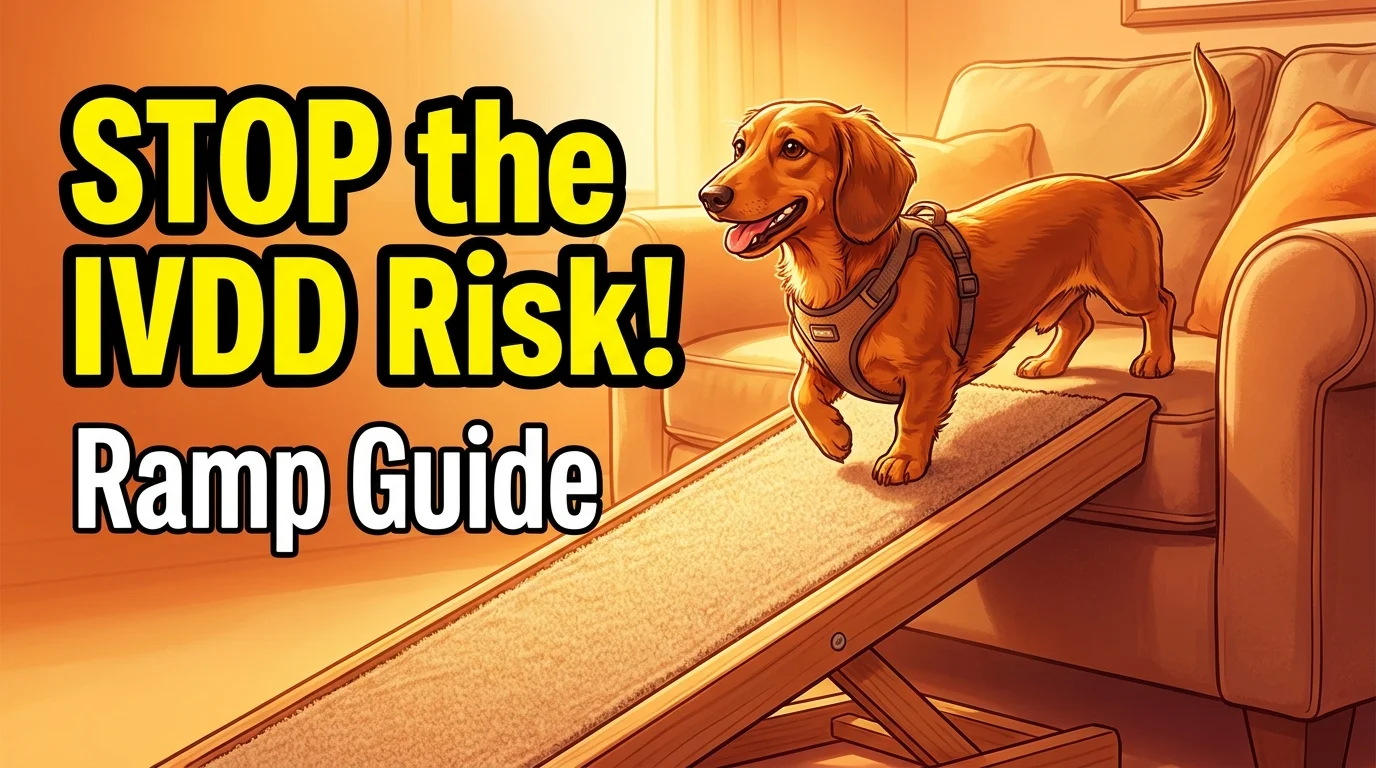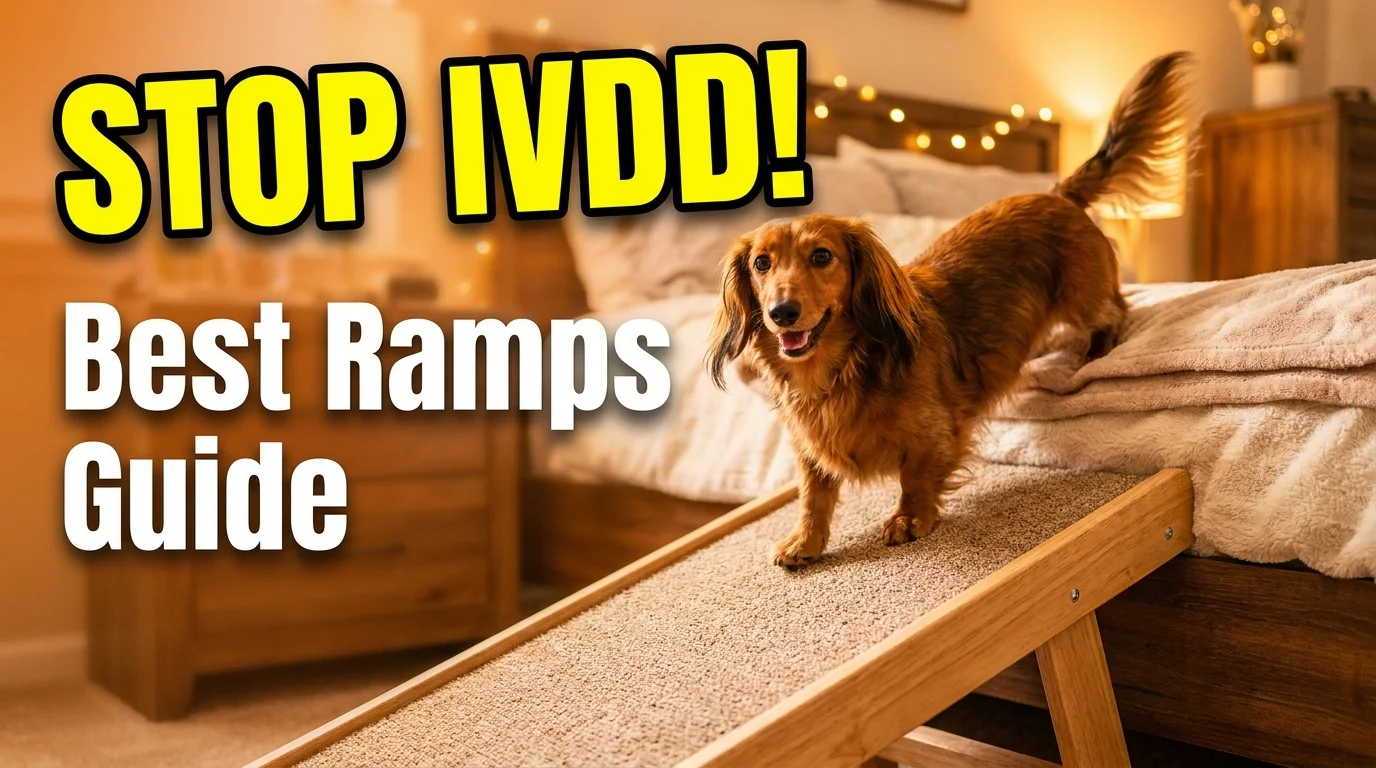
Dachshunds are beloved for their unique "wiener dog" silhouette, but their long spines and short legs come with a significant health risk: Intervertebral Disc Disease (IVDD). Statistics show that approximately one in four Dachshunds will suffer from IVDD at some point in their lives.
The primary trigger for spinal injuries in this breed is high-impact activity, particularly jumping off furniture like sofas and beds. To ensure your Dachshund lives a long, pain-free life, creating a "no-jump" environment is essential. This guide will help you understand how to choose the best ramps and stairs to protect your furry friend's back.
1. Why Every Dachshund Needs a Ramp
Unlike other breeds, Dachshunds are chondrodystrophic, meaning their spinal discs age and calcify prematurely. This makes them highly susceptible to disc herniation even from minor trauma.
The Danger of Jumping
When a Dachshund jumps down from a couch, the impact on their front legs and spine is immense. Over time, these repetitive micro-traumas weaken the discs. A sudden jump can lead to a disc rupture, causing severe pain, loss of bladder control, or even permanent paralysis.
Installing a ramp or specialized pet stairs is not a luxury—it is a critical preventive measure that can save you thousands in veterinary bills and spare your dog from surgery.
2. Ramps vs. Stairs: Which is Better for Dachshunds?
While both can help, there are distinct differences in how they impact a Dachshund's spine.
The Case for Ramps
Ramps are generally considered the "Gold Standard" for Dachshunds.
- Zero Impact: They provide a smooth, continuous surface that allows the spine to remain neutral.
- Future-Proof: As your dog enters their senior years, a ramp is much easier to navigate than any form of stairs.
The Case for Specialized Stairs
Standard stairs are often too steep for Dachshunds. However, "scalloped" or "foam" stairs with a gentle slope can be a good alternative if you have limited space.
- Space-Saving: Ramps require a long footprint to maintain a safe incline.
- Portability: Lightweight foam stairs are easier to move between rooms.
The Verdict: If you have the space, always choose a ramp. If space is tight, look for foam stairs with a very low rise and deep tread.
3. Key Features to Look For
When shopping for a ramp or stairs, keep these safety criteria in mind:
① Non-Slip Surface
Dachshunds need traction to feel confident. Look for surfaces covered in high-grip carpet, rubber, or specialized non-slip fabric. Avoid smooth plastic or wood surfaces, as slipping can cause the very spinal twisting you are trying to prevent.
② Gentle Incline
A ramp that is too short will be too steep. For a standard sofa, look for a ramp that is at least 30-35 inches long. The angle should ideally be around 25 to 30 degrees.
③ Stability
The ramp must not wobble. If a dog feels the surface move under them, they will likely stop using it and go back to jumping. Choose a sturdy model with a wide base and a high weight capacity.
④ Adjustable Height
Many high-quality wooden ramps offer adjustable height settings, allowing you to use the same ramp for both a low sofa and a higher bed.
4. Recommended Products for IVDD Prevention
Based on safety ratings and breed-specific design, here are our top picks:

MEJYJEM 3 Steps High Density Foam Dog Stairs
Features a gentle 'scalloped' design rather than sharp steps, making it perfect for the long spines of Dachshunds. The high-density foam provides excellent support without being too hard on the joints.
5. Frequently Asked Questions (FAQ)
Q: How do I train my Dachshund to use a ramp?
A: Use high-value treats! Lead them up and down the ramp slowly with a treat in your hand. Never force them. Most Dachshunds learn within a few days once they realize the ramp is easier and results in a reward.
Q: My dog is only 2 years old and very athletic. Do they really need a ramp?
A: Yes! IVDD is often a cumulative condition. The damage caused by jumping in their youth often leads to a crisis in their middle-aged years (ages 4-7). Prevention starts from day one.
Q: Are wooden ramps better than plastic ones?
A: Generally, yes. Wooden ramps tend to be heavier and more stable. Plastic ramps can be slippery and often lack the structural integrity needed for long-term daily use.
Conclusion: Protecting the Heart of Your Home
Your Dachshund’s back is the most vulnerable part of their body. By investing in a high-quality ramp and training them to use it, you are providing them with the best possible protection against IVDD. A little environmental adjustment today can lead to many more years of happy, healthy walks and tail wags.