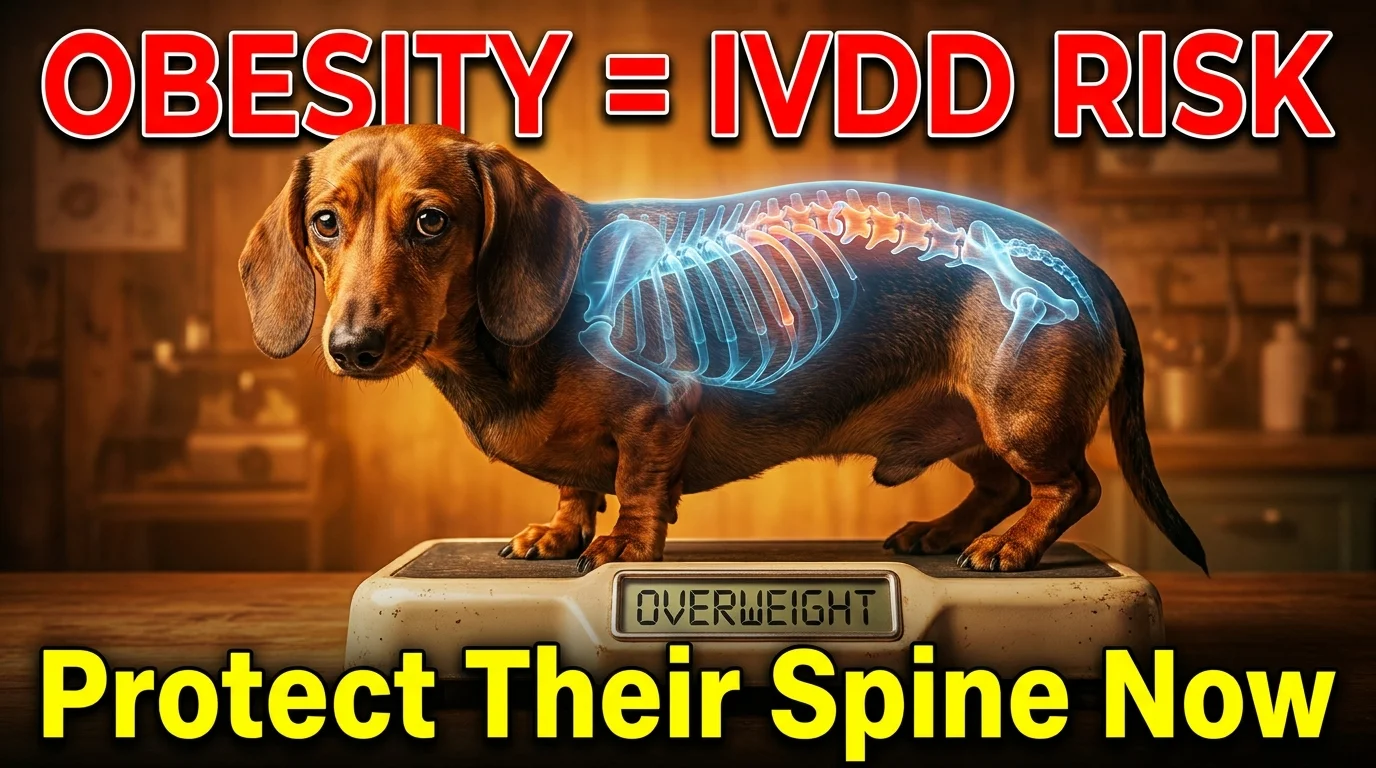
For dachshund owners, Intervertebral Disc Disease (IVDD) is one of the most concerning health issues. But did you know that one of the most significant, yet preventable, risk factors for IVDD is obesity?
In this article, we will explore the connection between a dachshund's unique body shape, the severe impact of excess weight on their spine, and actionable weight management strategies to keep your beloved companion healthy and pain-free.
The Connection Between Dachshund Anatomy and IVDD
Dachshunds are a chondrodystrophic breed, meaning they are genetically predisposed to having short legs and a long back. While this elongated body is undeniably adorable, it places constant mechanical stress on their spine and intervertebral discs.
The intervertebral discs act as shock absorbers between the vertebrae. In dachshunds, these discs tend to calcify and degenerate at an early age. Consequently, even minor impacts or sustained pressure can cause a disc to rupture or herniate, pressing against the spinal cord—a condition known as IVDD.
How Obesity Exacerbates Spinal Stress
Why does carrying extra weight make a dachshund more vulnerable to IVDD? The reasons are rooted in physics and physiology.
1. Increased Mechanical Load
Every extra pound your dachshund carries exponentially increases the gravitational and mechanical load on their spine. Think of a dachshund's back as a suspension bridge. When excess fat accumulates around the abdomen, it pulls the "bridge" downward, creating relentless pressure on the intervertebral discs.
2. Weakened Muscular Support
Obesity is often accompanied by a relative lack of muscle mass. Strong core and back muscles are essential for stabilizing the spine and maintaining proper posture. When the weight of the fat exceeds the supporting capacity of the muscles, the spine and joints bear the brunt of the physical stress, increasing the likelihood of injury.
3. The Vicious Cycle of Inactivity
Heavier dogs are generally less active because moving requires more effort and can cause discomfort. This inactivity leads to further muscle atrophy and a slower metabolic rate, making it even harder for the dog to lose weight. This vicious cycle directly contributes to spinal vulnerability.
Checking Your Dachshund's Ideal Weight
To determine if your dachshund is overweight, it is more effective to assess their Body Condition Score (BCS) rather than relying solely on a number on a scale.
A healthy dachshund (BCS 3 out of 5) should exhibit the following characteristics:
- Visible Waist: When viewed from above, there should be a distinct waistline behind the ribs.
- Abdominal Tuck: When viewed from the side, the abdomen should tuck upward toward the hind legs, not sag downward.
- Palpable Ribs: You should be able to feel their ribs easily beneath a thin layer of fat without pressing hard.
If you cannot feel the ribs or if the dog lacks a visible waist, they are likely overweight or obese and require a weight management plan.
Effective Weight Management Strategies to Protect the Spine
Protecting your dachshund from IVDD requires a proactive approach to weight management.
1. Strict Portion Control and Calorie Counting
Diet is the cornerstone of weight loss. Stop estimating portions; use a kitchen scale or a precise measuring cup to measure every meal. If your dog needs to lose weight, consult your veterinarian to determine their ideal target weight and calculate the appropriate daily caloric intake. Transitioning to a high-protein, low-calorie prescription diet may be necessary.
2. Limit Treats
Treats are a major source of hidden calories. They should never exceed 10% of your dog's total daily caloric intake. Instead of high-calorie commercial treats, offer healthy alternatives like small pieces of boiled carrots, green beans, or even kibble taken from their daily allowance.
3. Safe and Consistent Exercise
While exercise is important, sudden or high-impact activities can trigger IVDD in an overweight dachshund. Stick to controlled, low-impact exercises like walking on flat surfaces. Aim for two 20 to 30-minute walks per day. Strictly avoid activities that compress the spine, such as jumping off furniture or running up and down stairs.
4. Regular Monitoring
Weigh your dachshund every two to four weeks to track their progress. An easy home method is to weigh yourself holding the dog, then weigh yourself alone, and subtract the difference. Keep a log to share with your veterinarian.
FAQ
Q. I switched to a diet food, but my dachshund isn't losing weight. What should I do? A. You may still be feeding too large a portion, or someone in the household might be sneaking extra treats. If you are strictly controlling their diet and still see no progress, consult your vet to rule out underlying medical conditions like hypothyroidism.
Q. How can I exercise a dachshund that hates walking? A. Focus primarily on dietary restriction. For physical activity, incorporate indoor, low-impact mental stimulation games like nose work or puzzle toys. These encourage movement without straining the back.
Q. Does my dachshund still need to diet if they've already had IVDD surgery? A. Absolutely. Maintaining an ideal weight is critical for a smooth recovery and significantly reduces the risk of future herniations in other discs. Strict weight management is a lifelong commitment, especially post-surgery.
Conclusion
For a dachshund, obesity is not just a cosmetic issue; it is a direct catalyst for Intervertebral Disc Disease. As an owner, managing their diet and exercise is the most powerful tool you have to protect their long back.
Start assessing your dachshund's Body Condition Score today and implement safe weight management strategies. A leaner dachshund is a happier, more active, and significantly healthier companion.