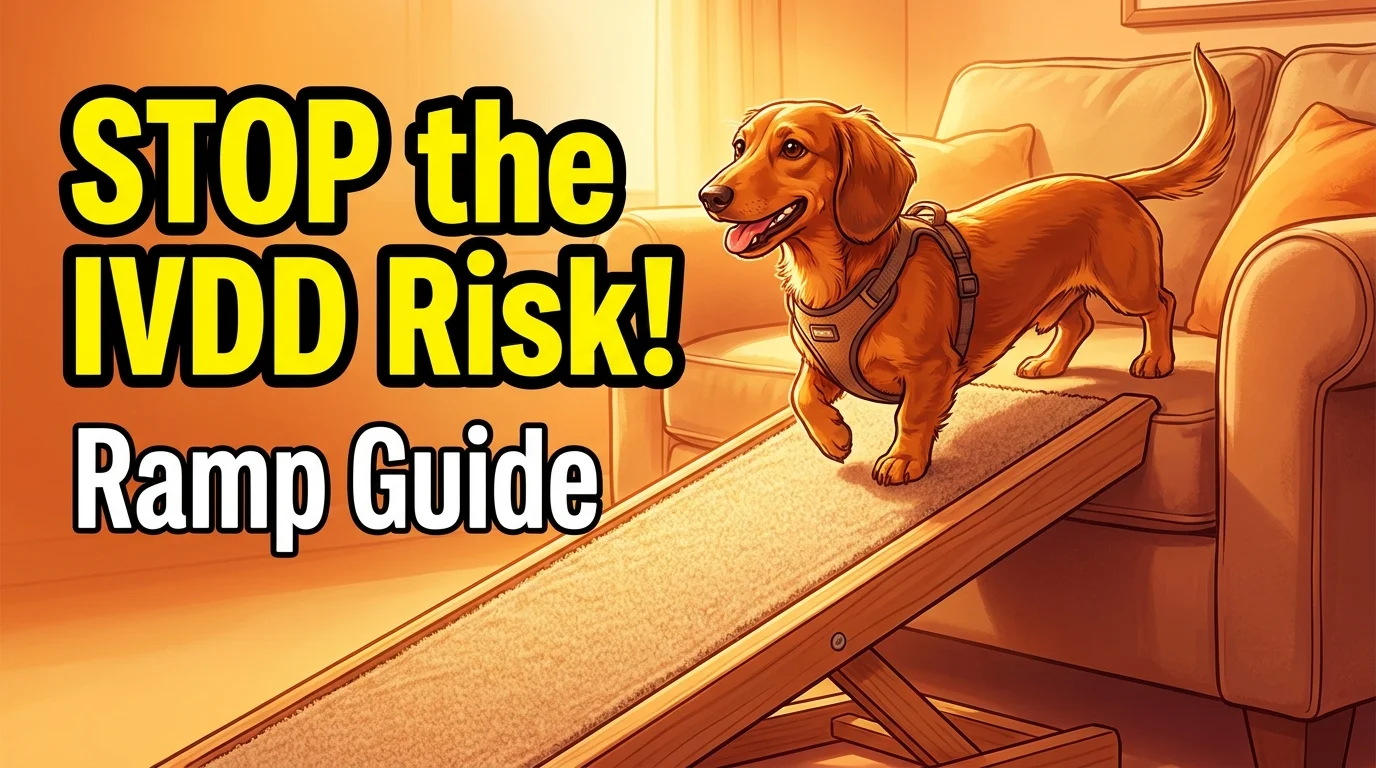
When sharing your home with a Dachshund, understanding their unique anatomy is the first step toward a long, healthy life together. Their iconic long bodies and short legs make them incredibly endearing, but this physical structure also predisposes them to Intervertebral Disc Disease (IVDD).
A simple, everyday action like jumping off a sofa or bed can be the catalyst for a severe spinal injury. In this comprehensive guide, we will explore the critical importance of indoor environmental management, specifically focusing on how dog ramps and steps can be a lifesaver for your Dachshund.
The Impact of Indoor Jumping on a Dachshund's Spine
The Dachshund's spine is constantly under stress as it works to support its elongated back. When a jumping motion is introduced, the force of the landing concentrates on specific segments of the spine, which can lead to disc damage.
The Hidden Dangers of Sofas and Beds
For many dogs, the sofa or bed is a safe haven filled with their owner's scent. It is natural for them to want to climb up and snuggle. However, the impact of jumping down from these elevated surfaces can equal several times the Dachshund's body weight. When this impact is repeated daily, the risk of disc degeneration or a sudden herniation (IVDD) increases exponentially.
Furthermore, if the dog lands on a slippery surface such as hardwood flooring, they may lose their footing, leading to sprains or more severe musculoskeletal injuries.
The Strain of Navigating Stairs
Navigating a standard household staircase is another significant challenge for a Dachshund. The downward motion, in particular, places immense strain on the front legs, neck, and upper back. Because of their short stature, the drop from one step to the next is relatively massive, causing them to absorb more shock than we might realize.
It is highly recommended to install baby gates to prevent your Dachshund from independently using the stairs. Carrying them up and down is the safest approach.
Choosing Between Dog Ramps and Steps
If completely banning your Dachshund from the furniture is not feasible, providing a safe alternative like a dedicated dog ramp or pet steps is an essential preventive measure.
Ramps vs. Steps: Which is Better?
Ramps provide a smooth, gradual incline without any sudden drops, making them the absolute safest option for a Dachshund's back. They are particularly crucial for senior dogs or those who have already experienced back issues. The main drawback is that ramps require more floor space to achieve a gentle slope.
Steps, on the other hand, are more compact and resemble human stairs. While healthy, young Dachshunds can use well-designed steps, it is vital to choose a product specifically tailored for small breeds. The steps must have a low rise (height between steps) and a deep tread (the flat part where the paw lands) to accommodate their long bodies safely.
Key Features to Look For
- Gentle Incline: If choosing a ramp, ensure the angle is not too steep. For steps, the height of each tier should ideally be no more than 4 inches (10 cm).
- Non-Slip Surface: A slippery surface can cause your dog to scramble and twist their back. Look for materials like high-traction carpet or ribbed fabric that allow their claws to grip securely.
- Width and Stability: The ramp or steps must be wide enough (at least 15-16 inches) to prevent accidental falls. Additionally, the structure must be sturdy and heavy enough that it does not wobble or tip over when the dog jumps onto it.
Holistic Indoor Environment Adjustments
While installing ramps is a significant step, comprehensive IVDD prevention requires looking at the entire indoor environment.
Managing Slippery Floors
Hardwood or tile floors are notoriously slippery for dogs, forcing them to tense their muscles constantly just to walk, which adds stress to their joints and spine. Consider applying a pet-safe anti-slip coating to the floors in areas where your Dachshund is most active. Alternatively, laying down washable rugs, runners, or interlocking foam mats can provide the necessary traction.
The Role of Weight Management
No matter how many ramps you install, carrying excess weight will always put undue stress on a Dachshund's spine. Maintaining an ideal body weight is the cornerstone of preventing almost all health issues in this breed. Regular weigh-ins and strict control over their diet and exercise regimen are non-negotiable for IVDD prevention.
FAQ: Common Questions About Ramps and Indoor Care
Q. My Dachshund refuses to use the new ramp. What should I do? A. It is entirely normal for dogs to be suspicious of a new object. Never force or pull them onto it. Instead, use high-value treats to create a positive association. Place treats along the ramp to encourage them to take one step at a time. Patience is key; it may take several days of gentle training before they feel confident.
Q. Is there a correct way to pick up my Dachshund? A. Yes, lifting them correctly is vital. Never pick them up vertically by placing your hands under their front armpits, as this stretches and stresses the spine. Always support their chest with one hand and scoop up their hindquarters with the other, keeping their back perfectly level (horizontal) as you lift.
Q. How should I manage their environment when I am not home? A. Many injuries occur when a dog jumps off the sofa while the owner is out. When leaving your Dachshund alone, it is best to confine them to a safe, single-level space such as a playpen or a dog-proofed room without access to elevated furniture.
Conclusion
Preventing IVDD in Dachshunds requires a proactive approach to their daily living environment. By minimizing the physical stress placed on their delicate spines, you can significantly reduce the risk of injury.
- Provide dog ramps or low-rise steps to prevent jumping from sofas and beds.
- Ensure any ramp or step has a non-slip surface and a stable base.
- Add rugs or anti-slip solutions to hardwood floors to improve traction.
- Commit to strict weight management and always use the correct lifting technique.
Creating a safe, Dachshund-friendly home takes effort, but the reward of seeing your companion move comfortably and pain-free for years to come is immeasurable.