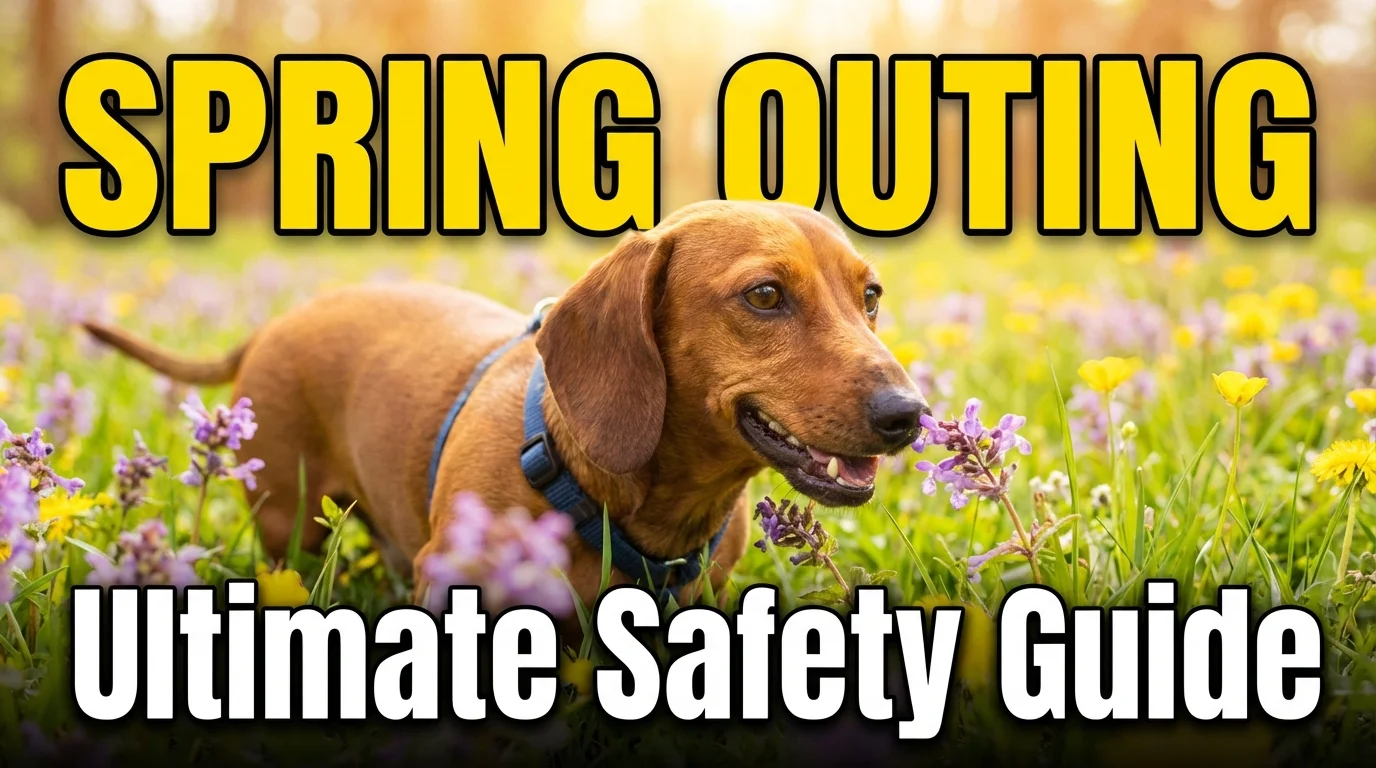
Spring has sprung, and the beautiful weather is a perfect invitation to get outdoors with your beloved Dachshund. While the sunshine and blossoming flowers are a delight, this season also brings unique challenges, especially for a breed with a long body and short legs.
This comprehensive guide will walk you through everything you need to know to ensure your spring adventures are both safe and enjoyable. From managing the risks of Intervertebral Disc Disease (IVDD) to tackling seasonal allergies and parasites, we’ve got you covered with veterinarian-approved advice. Let's dive in and prepare for a fantastic spring season together.
Top 3 Spring Safety Concerns for Dachshunds
The arrival of spring means more time spent outdoors, but it's crucial to be aware of the specific risks that come with the season for your long-bodied friend.
1. Managing Intervertebral Disc Disease (IVDD) Risk
As your Dachshund becomes more active, the risk of back injury increases. Dachshunds are genetically predisposed to IVDD, a condition where the cushioning discs between the vertebrae of the spinal column either bulge or burst. High-impact activities can put significant strain on their long spine.
- Preventive Measures:
- Keep your Dachshund on a leash in new environments to prevent sudden sprints.
- Avoid letting them jump on or off furniture or navigate steep stairs. Use ramps or carry them.
- In dog parks, stick to the small dog area and supervise play to prevent roughhousing with larger dogs.
- Ensure they take frequent breaks during playtime to avoid over-exertion.
2. Dealing with Seasonal Allergies
Just like humans, dogs can suffer from seasonal allergies. In spring, pollen from trees, grasses, and weeds is a major culprit. Because Dachshunds are low to the ground, they easily pick up pollen and other allergens on their fur and skin.
- Common Symptoms: Itchy skin (especially paws, belly, and ears), sneezing, watery eyes, and ear infections.
- Management Strategies:
- Walk your dog during the early morning or late evening when pollen counts are lower.
- Steer clear of tall grass and dense vegetation.
- After each walk, wipe your dog’s coat, paws, and belly with a damp cloth to remove allergens.
- If symptoms persist, consult your vet. They may recommend allergy testing, medicated shampoos, or antihistamines.
3. Preventing Fleas and Ticks
Warm weather marks the beginning of flea and tick season. These parasites are not just a nuisance; they can transmit serious diseases like Lyme disease and Rocky Mountain spotted fever. Ticks are especially prevalent in wooded areas and tall grass, which curious Dachshunds love to explore.
- Key Actions:
- Use a veterinarian-prescribed flea and tick preventative year-round. Options include spot-on treatments, oral medications, and collars.
- After every outing, thoroughly check your dog for ticks. Pay close attention to the areas between their toes, in and around the ears, under the collar, and around the tail.
- If you find a tick, do not try to pull it off with your fingers. Use fine-tipped tweezers to grasp the tick as close to the skin's surface as possible and pull upward with steady, even pressure. If you are uncomfortable doing this, contact your vet immediately.
The Ultimate Spring Outing Checklist
Be fully prepared for any adventure with this handy checklist.
| Category | Item | Check |
|---|---|---|
| Essentials | Leash, harness (recommended over a collar), ID tags, waste bags, fresh water, and a portable water bowl. | ☐ |
| Convenience | Treats, pet-safe wet wipes, a towel, and a pet first-aid kit (with antiseptic wipes, gauze, etc.). | ☐ |
| Travel Gear | A well-ventilated carrier or crate. For car travel, a dog seatbelt or a secure car seat. | ☐ |
| Apparel | A lightweight dog shirt for sun protection, and dog booties if walking on hot pavement or rough terrain. | ☐ |
【Affiliate Product】Recommended Carrier for Spring Adventures
(Due to a widespread outage affecting Amazon.com, we are currently unable to verify product information. We will update this section with a recommended, Dachshund-appropriate carrier once services are restored.)
Frequently Asked Questions (FAQ)
Q1: What are the best practices for long car rides with a Dachshund?
A1: Plan for a break every 1-2 hours to allow your dog to stretch, drink water, and relieve themselves. Always secure them in a crate or with a dog seatbelt for safety. If your dog is prone to car sickness, avoid feeding them a large meal right before you leave and ask your vet about anti-nausea medication.
Q2: How can I safely introduce my Dachshund to other dogs at the park?
A2: Start with a calm, on-leash greeting in a neutral area. Let the dogs sniff each other for a few seconds. Watch their body language closely. If both dogs are relaxed and friendly, and you have the other owner's consent, you can let them play off-leash in a securely fenced area. Always supervise their interaction.
Q3: Does my Dachshund need sunscreen?
A3: Yes, some do. Smooth-haired and light-colored Dachshunds can be susceptible to sunburn. Apply a pet-safe sunscreen to sensitive areas like the nose, ear tips, and belly, especially if you plan to be out during peak sun hours (10 AM to 4 PM).
Conclusion
With the right preparation, spring can be a wonderful season of exploration and bonding for you and your Dachshund. By being mindful of the key risks—IVDD, allergies, and parasites—and packing accordingly, you can ensure every outing is a safe and happy one.
Use this guide as your go-to resource for a worry-free season of fun. Now, get out there and make some joyful memories with your four-legged friend!