Dachshunds are incredibly affectionate dogs that form deep, lasting bonds with their owners. While this loyalty makes them wonderful companions, it also makes them highly susceptible to separation anxiety—a condition where a dog experiences extreme stress when left alone.
If your Dachshund barks incessantly, destroys furniture, or has accidents indoors while you are away, they are not acting out of spite. These are signs of genuine panic. To prevent this distress and help your dog feel secure during alone time, proper, step-by-step training is essential.
In this article, we will explore a science-backed, progressive training method to help your Dachshund build confidence and learn that being alone is safe and relaxing.
Why Do Dachshunds Struggle with Being Alone?
The Dachshund's difficulty with solitude is deeply rooted in their breed history. Originally bred as hunting dogs that worked closely with humans, they possess a strong pack instinct. Being separated from their "pack" triggers a primal fear of vulnerability.
Furthermore, Dachshunds are highly intelligent and observant. They quickly learn the subtle cues that signal your departure—such as picking up keys, putting on shoes, or grabbing a bag. For an anxious dog, these cues can induce a panic attack long before you even open the door.
Overcoming this anxiety requires teaching your dog two fundamental concepts: your departures are not a big deal, and you will always return.
Core Principles of Alone Time Training
Before starting the practical steps, it is crucial to understand the rules that govern successful separation anxiety training.
First, normalize departures and arrivals. Avoid emotional goodbyes. Saying "I'm so sorry, I'll be right back" in a sympathetic tone only validates your dog's anxiety. Similarly, when you return, ignore your dog until they are completely calm. Making a big fuss upon arrival teaches them that your return is the highlight of their existence, making your absence feel even worse.
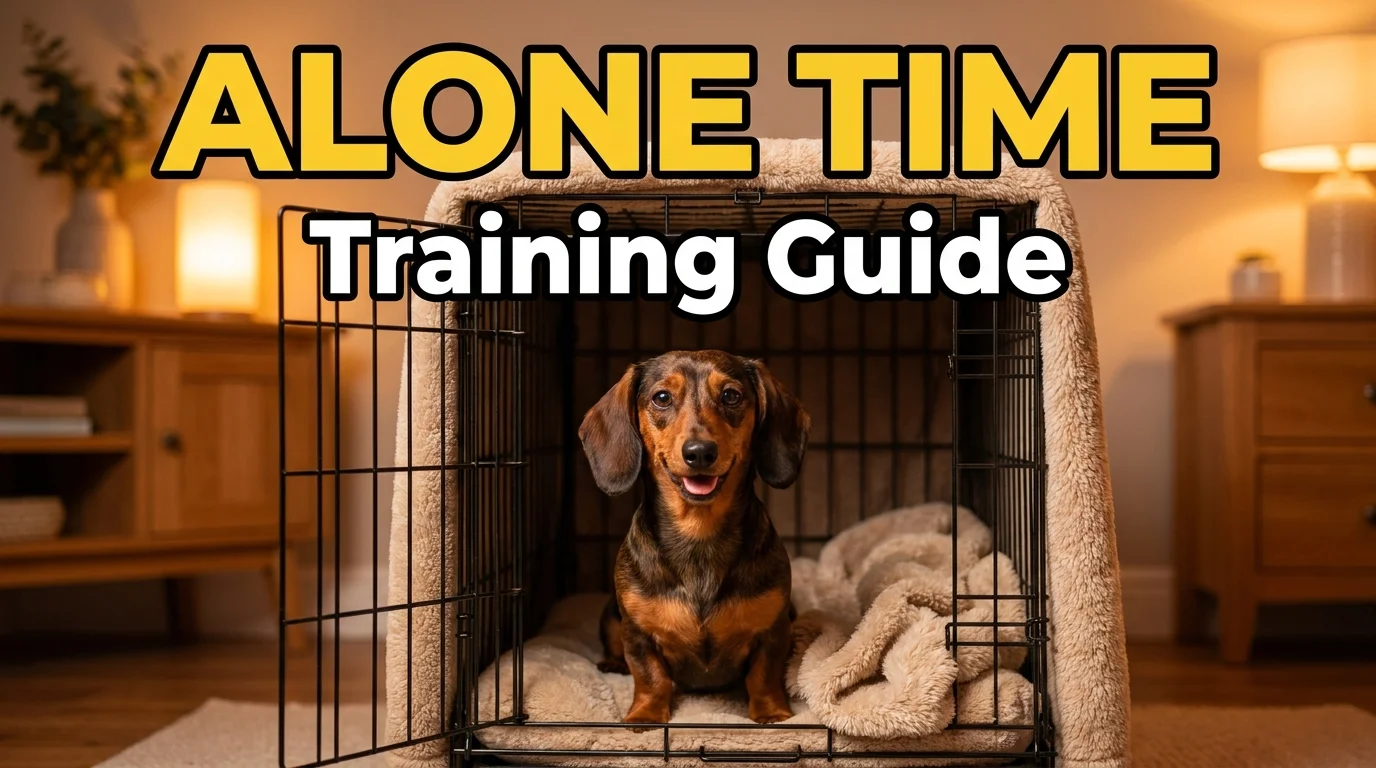
Second, create a safe, personal space. A crate or a secure playpen is highly recommended. Dogs naturally seek out small, den-like spaces when they feel vulnerable. A properly introduced crate provides a sanctuary where your Dachshund can relax.
Step-by-Step Desensitization Training
The most effective way to treat separation anxiety is through systematic desensitization. This involves exposing your dog to being alone for very short periods—so short that they do not experience anxiety—and gradually increasing the duration.
Step 1: Make the Crate a Positive Place
Start by teaching your Dachshund that their crate or designated safe area is wonderful. Leave the door open and toss high-value treats or favorite toys inside. Praise them when they enter voluntarily. Do not close the door yet. The goal is to build a strong positive association with the space.
Step 2: Practice Closing the Door
Once your dog happily enters the crate, begin closing the door for just a few seconds while they are eating a treat. Open the door before they finish eating. Gradually increase the time the door remains closed. If your dog whines or barks, you have progressed too quickly. Wait for a moment of silence, open the door, and reduce the time in the next repetition.
Step 3: Step Out of Sight
When your dog is comfortable with the door closed, practice leaving their line of sight. Step out of the room and immediately return. Reward calm behavior. Slowly increase the time you spend out of the room from a few seconds to a few minutes.
Step 4: Desensitize Departure Cues
To stop your dog from panicking at the sound of your keys or the sight of your coat, perform these actions without actually leaving. Pick up your keys and sit on the couch. Put on your coat and make dinner. By repeating this multiple times a day, these cues will lose their meaning and no longer trigger anxiety.
Step 5: The First Real Departures
Begin with very short real departures, such as stepping outside to check the mail or taking out the trash. Return calmly and do not make a fuss. If successful, gradually increase the duration to 10 minutes, 30 minutes, and eventually longer periods. Always progress at a pace your dog can handle without showing signs of stress.
Keeping Your Dachshund Occupied
A tired dog is a calm dog. Ensuring your Dachshund gets adequate physical exercise and mental stimulation before you leave is vital. A brisk walk or a training session can help burn off excess energy, making them more likely to sleep while you are gone.
Additionally, providing a long-lasting, engaging activity can distract them during your departure.

KONG - Classic Dog Toy, Durable Natural Rubber
The KONG Classic is the gold standard of dog toys. Stuff it with peanut butter or treats and freeze it. Giving this to your Dachshund right before you leave provides a challenging puzzle that redirects their focus away from your departure.
Reserve special toys like a stuffed KONG exclusively for alone time. This turns your departure into a positive event—it becomes the only time they get their favorite treat.
Frequently Asked Questions (FAQ)
Q. Should I get another dog to keep my Dachshund company? A. Not necessarily. Separation anxiety is typically directed at the human owner, not a general fear of being alone. Getting a second dog rarely cures the anxiety and may even result in two anxious dogs. Focus on training your current dog first.
Q. Is it helpful to leave the TV or radio on? A. Yes, playing classical music, talk radio, or leaving the TV on at a low volume can provide comforting background noise and help mask outside sounds that might startle your dog.
Q. What if my dog starts barking while I am practicing departures? A. If your dog barks, it means you have pushed them past their threshold. Do not return while they are barking, as this teaches them that barking brings you back. Wait for a brief pause in the barking, return calmly, and decrease the duration of your next departure.
Conclusion
Training a Dachshund to be comfortable alone requires immense patience, consistency, and a deep understanding of their emotional needs.
By utilizing systematic desensitization, creating a secure environment, and providing mental enrichment, you can help your Dachshund overcome their fear of solitude. Remember, progress may be slow, but every small victory builds a foundation of confidence that will lead to a happier, more relaxed dog.