Why Does My Dachshund Pull on the Leash? 5 Common Reasons
That persistent tug-of-war during walks is a frustration many Dachshund owners know all too well. This behavior isn't just your Doxie being stubborn; it's often rooted in their unique breed history, personality, and environment. Understanding the 'why' is the first crucial step toward a solution.
1. Deep-Rooted Hunting Instincts
Dachshunds were originally bred in Germany to hunt badgers. Their name even translates to "badger dog." This history has endowed them with a powerful prey drive and an instinct to follow scents. When they catch an interesting smell or spot a squirrel, their innate programming kicks in, compelling them to charge forward and investigate.
2. Boundless Curiosity
Dachshunds are intelligent and incredibly curious dogs. For them, the outside world is a sensory playground filled with exciting new smells, sights, and sounds. Their desire to explore every new thing can easily override their desire to walk calmly by your side, leading to a strong pull toward the next point of interest.
3. Excitement or Fear from Lack of Socialization
If a puppy isn't exposed to a wide variety of sights, sounds, people, and other dogs during their critical socialization window (3 to 16 weeks of age), they can grow up to be fearful or overly excited by new encounters. This can manifest as pulling to either escape something scary or lunge toward something in a state of over-arousal.
4. Learned Behavior: Pulling Works!
Dogs are simple creatures in one respect: they repeat behaviors that get them what they want. If your Dachshund pulls on the leash and you take a step forward, you have inadvertently taught them that pulling is the way to move ahead. They've learned they are the leader of the walk, and you are just following along.
5. Pent-Up Energy
Despite their small size, Dachshunds are energetic dogs that require regular exercise. If they don't get enough physical activity and mental stimulation, they can become a coiled spring of pent-up energy. When it's finally time for a walk, that energy explodes, resulting in frantic pulling from the moment you step out the door.
The Serious Risks of Leash Pulling for Dachshunds
Allowing leash pulling to continue is not just an annoyance; it poses significant health and safety risks, especially for a breed with a unique anatomy like the Dachshund.
- Increased Risk of IVDD (Intervertebral Disc Disease): This is the most critical concern. The Dachshund's long spine is highly susceptible to injury. Sudden jerks and constant tension from leash pulling put immense strain on their vertebrae, significantly increasing the risk of a debilitating and painful spinal disc herniation.
- Neck and Tracheal Damage: Using a collar, especially a choke or prong collar, while your dog is pulling can cause serious damage to their neck and trachea (windpipe). This can lead to chronic coughing, respiratory problems, and severe pain.
- Danger to the Owner and Others: A sudden, strong pull can easily knock an owner off balance, leading to falls and injuries. Furthermore, an out-of-control dog can run into traffic, approach other dogs aggressively, or jump on people, creating dangerous and stressful situations for everyone.
A 5-Step Guide to Effective Loose-Leash Walking
Correcting a pulling habit requires patience and consistency. The goal is to use positive reinforcement to teach your dog that walking politely beside you is far more rewarding than pulling ahead. Forget yanking the leash; it's time for a smarter approach.
Step 1: Get the Right Equipment
Ditch the collar for walks. A front-clip, no-pull harness is the single most effective tool for managing a pulling dog. When the leash is attached to the D-ring on the chest, any pulling force gently turns the dog back toward you, redirecting their forward momentum without causing pain or choking. This makes it physically harder for them to pull you forward.
Step 2: Be a Tree
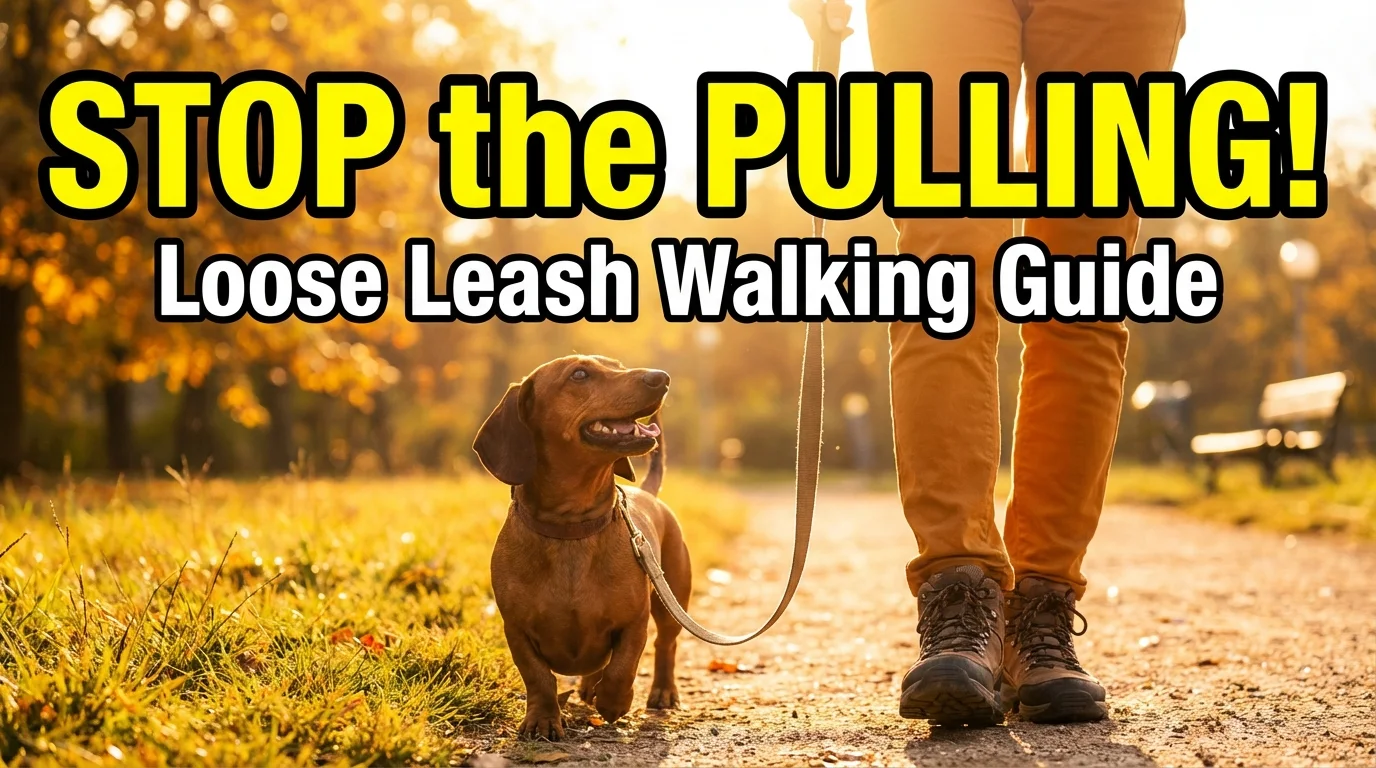
This is the foundation of loose-leash training. The moment your Dachshund pulls and the leash becomes taut, stop walking. Stand still and silent like a tree. Do not move forward. Wait patiently. The instant your dog stops pulling and releases the tension on the leash (they might look back at you), praise them and immediately start walking again. The lesson: "Pulling makes us stop. A loose leash makes us go."
Step 3: Reward the Check-In
Make walking beside you the most rewarding place to be. Arm yourself with high-value treats (small pieces of chicken, cheese, or special training treats). Whenever your dog is walking on a loose leash or voluntarily looks back at you, immediately mark the behavior with a happy "Yes!" and give them a treat. This teaches them to pay attention to you.
Step 4: Practice Direction Changes
Keep your dog guessing and focused on you. While walking, randomly change your direction. If your dog is pulling ahead, make a 180-degree turn and walk the other way, encouraging them to follow with a cheerful voice. When they catch up and are walking beside you, reward them. This teaches them that they need to watch you to know where the walk is going.
Step 5: Start Easy and Gradually Increase Difficulty
Don't start your training on a busy street full of distractions. Begin in a quiet hallway or your backyard. Once your dog is successful there, move to a quiet park or street during off-peak hours. Gradually introduce more distractions as your dog's skills improve. Setting your dog up for success is key.
Common Training Mistakes to Avoid
Your efforts can be undermined by a few common mistakes. Be mindful to avoid these:
- Yanking or Jerking the Leash: This creates an oppositional reflex where the dog's instinct is to pull back even harder. It creates a painful and adversarial relationship on the walk.
- Using a Retractable Leash: These leashes teach dogs the exact opposite of what you want: that pulling extends the leash and lets them go wherever they please. They offer little control and are dangerous. Use a standard 6-foot leash for training.
- Scolding or Shouting: Your dog often doesn't understand what you're shouting about and may just become more anxious or excited, which can worsen the pulling. Training should be positive and encouraging.
Frequently Asked Questions (FAQ)
Q1: When should I start leash training my Dachshund puppy?
A1: You can start as soon as your veterinarian gives you the green light for walks after their vaccination series is complete. The earlier you instill good habits, the better. You can even begin practicing with a harness and leash indoors before they are cleared to go outside.
Q2: Can I train an older Dachshund to stop pulling?
A2: Absolutely! It may take more time and patience, as the habit is more ingrained, but old dogs can certainly learn new tricks. The principles of positive reinforcement are the same regardless of age. Be consistent, and you will see progress.
Q3: What if the pulling doesn't stop?
A3: If you've been consistent with these methods and are still struggling, don't hesitate to seek help from a certified professional dog trainer or a veterinary behaviorist. They can provide a personalized plan and identify any underlying issues that may be contributing to the behavior.
Conclusion
Teaching your Dachshund to walk on a loose leash is a journey, not a race. It's about transforming a frustrating daily chore into a pleasant bonding experience. By understanding your Doxie's instincts and using patient, positive training methods, you can replace the constant pulling with a calm and connected partnership.
Remember, the goal is not to dominate your dog with force, but to become their trusted leader and guide. A front-clip harness, high-value treats, and consistent application of the 'Be a Tree' method are your best tools. With every walk, you are strengthening your bond and ensuring your Dachshund's long-term spinal health and safety. Happy walking!