Have you ever found yourself questioning the best bathing routine for your dachshund? It's a common query among wiener dog parents. "How often is too often?" "What's the safest way to bathe them without straining their long back?" "How can I handle a dog that dreads bath time?" These are valid concerns for any loving owner.
Dachshunds have skin that can be prone to certain issues, and their coats, whether smooth, long-haired, or wire-haired, have unique needs. Proper, regular bathing is a cornerstone of their health and hygiene. However, an incorrect approach can do more harm than good, potentially stripping their skin of essential oils or creating a lasting fear of the bathtub.
This comprehensive guide, grounded in veterinary best practices, will walk you through everything you need to know. We'll cover the ideal bathing frequency for your dachshund, provide a detailed step-by-step process from prep to drying, and offer gentle solutions for anxious pups. By the end of this article, you'll be equipped to make bath time a safe, stress-free, and even enjoyable experience for you and your beloved dachshund.
How Often Should You Bathe Your Dachshund?
The general rule of thumb for bathing a healthy dachshund is once every 1 to 2 months. A dog's skin is thinner and more sensitive than human skin. Over-bathing can strip away the natural oils (sebum) that protect their skin, leading to dryness, irritation, flakiness, and a compromised skin barrier.
This frequency can be adjusted based on several factors:
- Skin Conditions: If your dachshund has a skin condition like seborrhea or allergic dermatitis, your veterinarian may prescribe a medicated shampoo and a specific bathing schedule as part of the treatment plan. Always follow your vet's instructions.
- Activity Level and Lifestyle: An adventurous dachshund who loves rolling in the mud at the park will naturally need more frequent baths than a homebody. After a particularly dirty outing, a bath is a good idea. However, if this happens often, consider rinsing with plain water to avoid overuse of shampoo.
- Coat Type: While the basic frequency remains the same for all three coat types (smooth, long, and wire), long-haired and wire-haired dachshunds require more diligent daily brushing to prevent mats and tangles, which can make bathing more difficult if left unattended.
The 7-Step Guide to Bathing Your Dachshund at Home
A successful bath is all about preparation and a gentle touch. Given the dachshund's unique long-and-low physique, preventing back strain is a top priority.
Step 1: Get Everything Ready
Avoid scrambling for supplies mid-bath by setting up your station beforehand. Place everything you'll need within arm's reach.
- Dog-Specific Shampoo & Conditioner: Always use products formulated for dogs, as human shampoos have the wrong pH and can irritate their skin.
- Non-Slip Mat: Place this in the tub or sink to give your dachshund secure footing and prevent slips that could injure their back.
- Absorbent Towels: Have several clean, dry towels ready.
- Soft Washcloth or Sponge: For gently washing your dog's face.
- High-Value Treats: For rewarding good behavior and creating a positive association with bath time.
- Hair Dryer: A dryer with a low-heat, low-speed setting is ideal.
Step 2: Brush Before the Bath
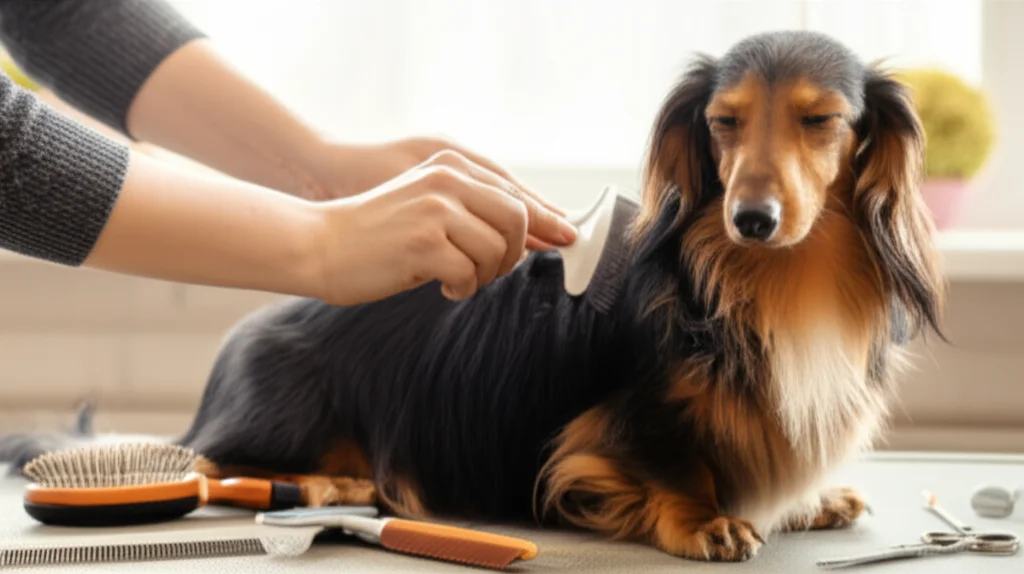
Thoroughly brush your dachshund's coat before it gets wet. This removes loose hair, debris, and any tangles or mats. Wetting a matted coat will only make the knots tighter and harder to remove.
Step 3: Wet the Coat with Lukewarm Water
Use lukewarm water, around 98.6°F to 100°F (37°C)—what feels comfortably warm, but not hot, to your wrist. To minimize stress, hold the shower nozzle close to your dog's body. Start with their rear and paws, slowly working your way up their body. Save the head and face for last, as most dogs dislike having water on their face.
Step 4: Lather Up Gently
Work the shampoo into a good lather in your hands before applying it to your dog's coat. Start at the neck and work your way back, massaging gently with your fingertips. Be sure to wash their belly, legs, and paws. Use a washcloth or sponge for the face, being extremely careful to avoid getting soap in their eyes, nose, or ears.
Step 5: Rinse, Rinse, and Rinse Again
This is one of the most critical steps. Leftover shampoo residue is a leading cause of post-bath itching and skin irritation. Rinse thoroughly, using your fingers to lift the coat and ensure water reaches the skin. Pay extra attention to areas like the armpits, groin, and between the toes.
Step 6: Towel Dry with Care
Squeeze out excess water from the coat, then use an absorbent towel to gently pat and blot your dachshund dry. Avoid vigorous rubbing, which can cause tangles and skin irritation. Using a second, dry towel can significantly speed up the process.
Step 7: Dry Completely with a Hair Dryer
A damp coat can breed bacteria and lead to skin problems or a musty smell. It's crucial to get your dachshund completely dry, right down to the skin. Use a hair dryer on its lowest heat and speed settings. Keep the dryer at least a foot away from your dog and move it continuously to prevent concentrating heat on one spot. Use a brush to fluff the hair and help it dry faster.
What If Your Dachshund Hates Baths?
It's not uncommon for dogs to be fearful of baths. Never force it. The key is patience and positive reinforcement.
- Make the Bathroom a Happy Place: Spend time in the bathroom when it's not bath time. Play with toys, give treats, and create a positive atmosphere.
- Team Up: If possible, have one person comfort and hold the dog while the other washes. This can make the process much quicker and less stressful.
- Use High-Value Rewards: Reward your dog for each step of the process—getting in the tub, getting wet, being lathered. This helps build a positive association.
- Try Distraction Tools: Lick mats that stick to the tub wall are fantastic. Spread some dog-safe peanut butter or a pet-friendly paste on it, and your dog will be happily distracted while you wash.
If home bathing remains a significant struggle, don't hesitate to seek help from a professional groomer. They have the experience and equipment to handle anxious dogs safely.
Frequently Asked Questions (FAQ)
Q1: At what age can I give my dachshund puppy its first bath? A1: It's best to wait until your puppy has completed their vaccination series and has settled into their new home, which is typically around 3-4 months of age. Young puppies have difficulty regulating their body temperature, so baths can be stressful and risky. When you do give that first bath, ensure the room is warm and the experience is short and positive.
Q2: Are there alternatives to a full bath for managing odor? A2: Absolutely. Daily brushing is the first line of defense against odor as it removes dirt and loose hair. You can also use a damp cloth or pet-friendly grooming wipes for quick clean-ups between baths. Waterless shampoo foams are another great option for a quick refresh without the full bath experience.
Q3: Can I use human shampoo on my dachshund? A3: No, you should never use human shampoo on your dog. The pH of a dog's skin is different from ours. Human shampoos are too acidic for dogs and can disrupt their skin's natural barrier, leading to dryness, irritation, and potential infections. Always use a shampoo specifically formulated for canines.
Conclusion
Bathing your dachshund once every month or two using the correct technique is a vital part of their grooming routine that contributes directly to their skin and coat health. By being mindful of their long back, using a non-slip mat, and ensuring the water temperature is just right, you can create a safe environment. For reluctant bathers, patience, positive reinforcement with treats, and distraction tools can transform the experience.
Mastering a proper bathing routine is more than just a chore; it's an act of care and a chance to bond with your dog. Make your next bath time a happy, healthy, and stress-free one.