Introduction: The Annual "Fur-pocalypse" in Spring
As the weather warms up and spring flowers begin to bloom, Dachshund owners often notice another, less welcome sign of the season: a sudden explosion of dog hair. It's on your clothes, your furniture, and drifting across your floors. If you're finding yourself wondering if this "fur-pocalypse" is normal, you're not alone.
For most Dachshunds, this heavy spring shedding is a natural process known as seasonal shedding or "blowing coat." It's a biological response to the changing seasons. This comprehensive guide will walk you through the science behind why your Doxie sheds, provide tailored grooming advice for each of the three Dachshund coat types (smooth, long, and wire-haired), and recommend essential tools to help you manage the shedding and keep your dog's coat healthy and comfortable.
The Science of Shedding: Why Dachshunds Blow Their Coat
Dachshunds are a double-coated breed. This means they have two distinct layers of fur:
- Topcoat (or Guard Hairs): The coarser, longer hairs that you see and feel on the surface. This layer repels water and protects the skin from sun and scratches.
- Undercoat: A softer, denser, and more insulating layer of fur close to the skin. Its primary job is to regulate body temperature.
Seasonal shedding is triggered primarily by changes in daylight hours (photoperiod). As the days get longer in the spring, a dog's brain signals that it's time to shed the dense, fluffy winter undercoat to make way for a lighter summer undercoat. This process ensures they don't overheat in the warmer months ahead. The most intense shedding period typically occurs in the spring, as they lose their heavy winter insulation.
Coat-Specific Grooming Strategies for Your Dachshund
Not all Dachshunds are created equal when it comes to shedding. The grooming routine that works for a smooth-haired Doxie won't be sufficient for a long-haired one. Here’s how to tailor your approach to your dog's specific coat type.
1. Grooming the Smooth-Haired Dachshund
Don't let their sleek appearance fool you; smooth-haired Dachshunds shed a surprising amount. Their short, stiff hairs have a tendency to weave themselves into fabric, making them particularly noticeable on furniture and clothing. They shed moderately year-round, with a significant increase during the spring and fall shedding seasons.
- Brushing Frequency: Daily during heavy shedding seasons (spring/fall), and at least 2-3 times a week otherwise.
- Recommended Brushes: A rubber curry brush is excellent for lifting and removing loose, dead hair and stimulating the skin. A bristle brush can be used afterward to distribute natural oils and add shine to their coat.
2. Grooming the Long-Haired Dachshund
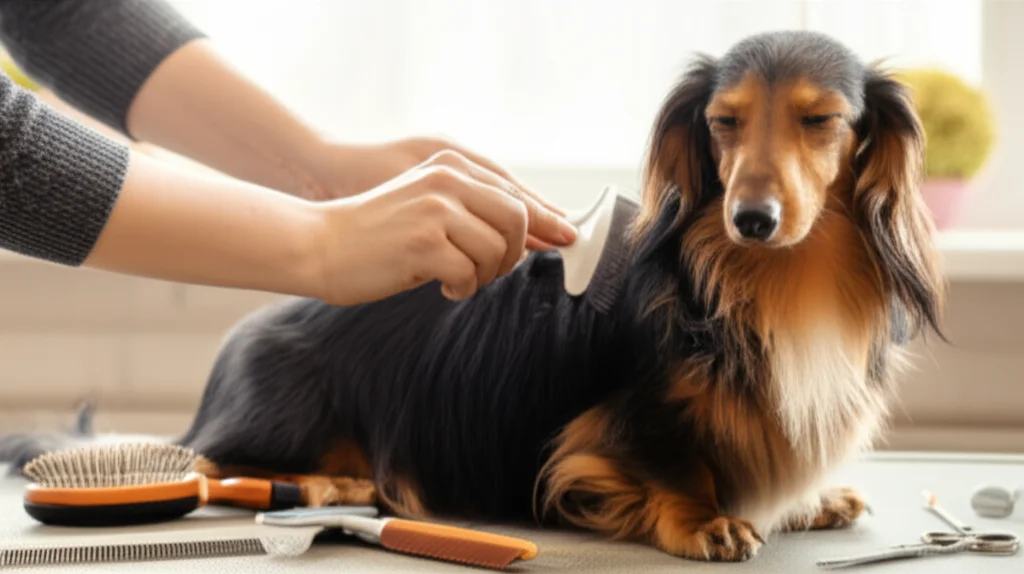
With their elegant, flowing locks, long-haired Dachshunds require the most intensive grooming. Their fine undercoat is prone to matting if not brushed regularly, especially during shedding season when it comes out in clumps. Mats can be painful and lead to skin infections.
- Brushing Frequency: Daily is a must to prevent tangles and mats.
- Recommended Brushes: Start with a slicker brush or a pin brush to gently work through the longer guard hairs and break up any developing tangles. Pay close attention to friction areas like behind the ears, under the legs (in the "armpits"), and on their hindquarters. Follow up with a steel comb to ensure you've removed all the loose undercoat and that there are no hidden mats close to the skin.
3. Grooming the Wire-Haired Dachshund
Wire-haired Dachshunds have a unique, coarse outer coat and a soft undercoat. They are generally considered the lowest-shedding of the three types. However, their dead hairs don't fall out easily on their own. Instead, they can get trapped in the coat, leading to a dull appearance and potential skin irritation.
- Brushing Frequency: 2-3 times per week to remove debris and loose hair.
- Specialized Care: To maintain the proper texture and health of a wire coat, a technique called hand-stripping is recommended. This involves manually pulling out the dead outer guard hairs to allow a new, healthy coat to grow in. This is a specialized skill, and most owners opt to have it done by a professional groomer every 6-8 months. Clipping a wire coat can damage the texture, causing it to become soft and lose its protective qualities.
Essential Tips for Surviving Shedding Season
Beyond daily brushing, these strategies can make shedding season more manageable for both you and your dog.
The Power of a Good Bath
A warm bath can work wonders to loosen and wash away a significant amount of dead, ready-to-shed undercoat. Use a high-quality, gentle dog shampoo and rinse thoroughly. After the bath, a thorough blow-dry (on a low, cool setting) while brushing can help remove even more fur. Never leave your Dachshund to air-dry completely, as a damp undercoat can lead to skin issues.
Nutrition for a Healthy Coat
A healthy coat starts from within. Ensure your Dachshund is on a high-quality, balanced diet. Look for foods rich in protein and essential fatty acids, such as Omega-3 and Omega-6. These nutrients are vital for strong hair follicles and healthy skin, which can help regulate the shedding cycle.
Invest in a deShedding Tool
For double-coated breeds like the Dachshund, a standard brush sometimes isn't enough to tackle the undercoat. A deShedding tool is specifically designed to reach through the topcoat and safely remove loose, dead undercoat hair without cutting or damaging the skin or topcoat.

FURminator Small Dog Undercoat deShedding Tool, Short Hair
The ultimate tool for tackling shedding. This deShedding tool is recommended by veterinarians and effectively removes loose undercoat hair, reducing shedding by up to 95%. Perfect for short-haired Dachshunds.
Frequently Asked Questions (FAQ)
Q1: How can I tell if my dog's shedding is abnormal?
A1: Seasonal shedding should be relatively uniform across your dog's body. Red flags that might indicate a medical issue include: bald patches (alopecia), skin that is red, inflamed, or has sores, excessive scratching or licking, and a dull, brittle coat. If you notice any of these signs, it's time to visit your veterinarian to rule out issues like allergies, parasites, or hormonal imbalances.
Q2: What are the best ways to keep my house clean during shedding season?
A2: A good vacuum cleaner designed for pet hair is your best friend. Rubber brooms or squeegees are also surprisingly effective at pulling hair out of carpets and rugs. For furniture and clothing, use a lint roller or a damp rubber glove—simply wipe your hand over the surface, and the hair will ball up.
Q3: Does shaving my Dachshund help with shedding?
A3: No, you should never shave a double-coated dog like a Dachshund (unless for a medical reason). Shaving damages the natural shedding and growth cycle of both the undercoat and topcoat. It can lead to improper regrowth, potential skin problems, and removes their natural protection from the sun and heat.
Conclusion
While the deluge of fur during the spring can be frustrating, remember that shedding is a normal and necessary process for your Dachshund's health and comfort. By understanding the needs of your dog's specific coat type and establishing a consistent grooming routine, you can significantly reduce the amount of loose hair in your home.
Embrace this grooming time as a bonding experience. Regular brushing not only controls shedding but also allows you to check your dog's skin for any abnormalities and strengthens the connection you share. With the right tools and a little bit of patience, you can keep your Doxie's coat in top condition and navigate shedding season like a pro.