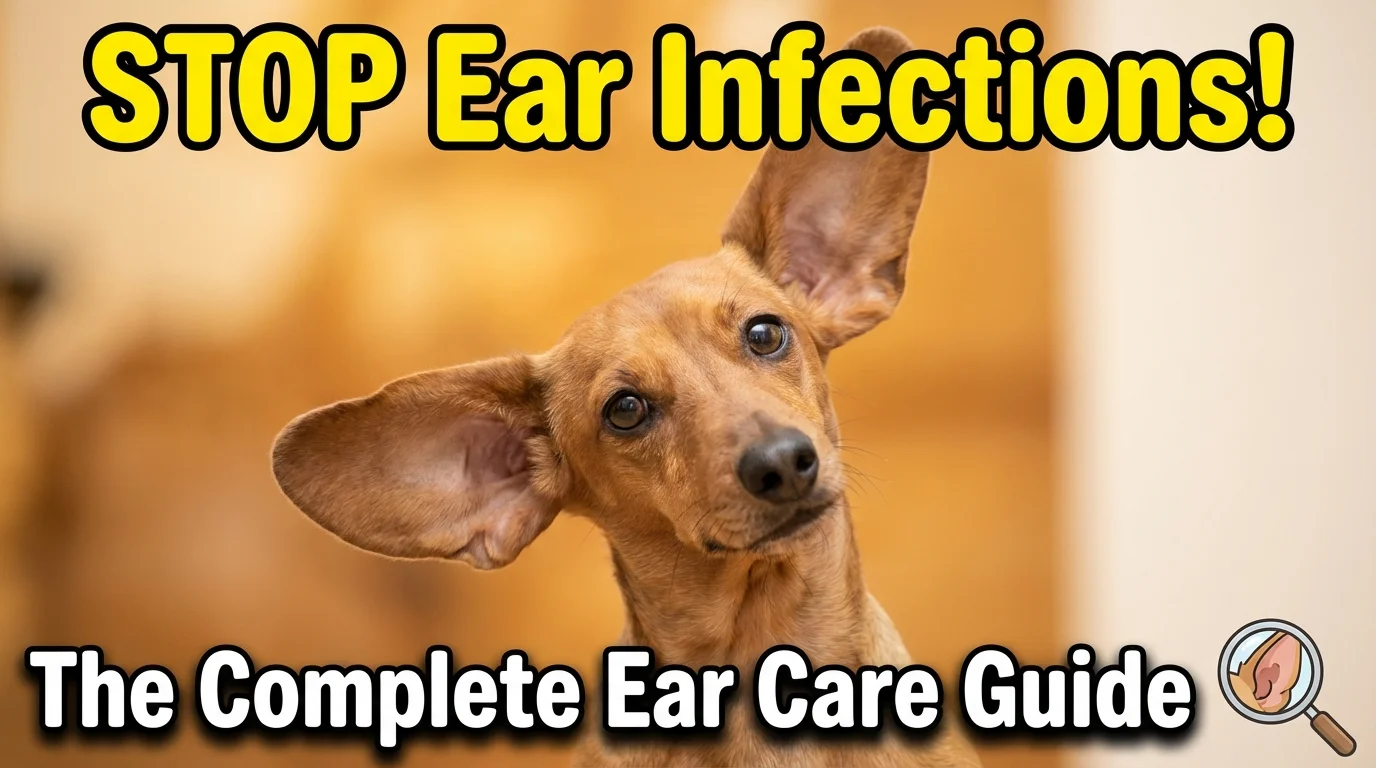
While their long, floppy ears are a signature part of their charm, they also make Dachshunds particularly susceptible to ear problems. The very structure that makes them adorable also creates a warm, moist environment perfect for bacteria and yeast to thrive, leading to painful infections like otitis externa.
If you've ever wondered, "Is my Dachshund scratching their ears too much?" or noticed a faint, unpleasant odor, you're in the right place. This comprehensive guide, grounded in veterinary science, will walk you through everything you need to know about proper Dachshund ear care. We'll cover the ideal cleaning frequency, a safe step-by-step cleaning process, and the critical warning signs that mean it's time to call the vet. Let's dive in and learn how to keep your Doxie's ears healthy and trouble-free.
Why Are Dachshunds So Prone to Ear Infections? The Floppy Ear Factor
The primary reason for a Dachshund's ear troubles lies in their anatomy. The long, pendulous ear flap, or "pinna," covers the ear canal, severely restricting airflow. This creates a microenvironment within the ear canal that is a breeding ground for problems.
Here are the main risk factors associated with their floppy ears:
| Risk Factor | Details |
|---|---|
| High Humidity & Temperature | The covered ear canal traps heat and moisture, creating a dark, damp, and warm environment—ideal conditions for the overgrowth of bacteria and yeast (like Malassezia). This is especially problematic during humid summer months or after swimming. |
| Debris Accumulation | The L-shape of a dog's ear canal already makes it difficult for wax, dead skin cells, and trapped debris to exit. The floppy ear flap further hinders this natural cleaning process, leading to buildup that can cause irritation and fuel infections. |
| Delayed Detection | Because the inner workings of the ear are hidden from plain sight, owners may not notice the early signs of trouble, such as redness or mild swelling. The infection can become well-established before obvious symptoms appear. |
This combination of factors makes Dachshunds predisposed to recurrent otitis externa (inflammation of the outer ear canal). This condition can be very painful and, if left untreated, can progress to more serious middle and inner ear infections. Therefore, proactive, routine care is the cornerstone of prevention.
How Often Should You Clean Your Dachshund's Ears? A Vet's Advice
When it comes to ear cleaning, more is not necessarily better. Over-cleaning can irritate the sensitive skin of the ear canal, stripping its natural protective oils and potentially leading to more problems. The key is to find a balance based on your individual dog's needs.
General Frequency Guideline: For a healthy Dachshund with no history of ear issues, a routine cleaning every 2 to 4 weeks is generally sufficient. A dog's ears have a natural self-cleaning mechanism, so if they look clean and don't smell, there's no need to intervene more frequently.
When to Clean:
- During Your Weekly Health Check: Make it a habit to flip up your Dachshund's ears and take a quick look and sniff once a week. If you see a small amount of light brown wax or notice a mild, yeasty odor, it's time for a cleaning.
- After Baths or Swimming: Any time your Dachshund's ears might have been exposed to water, it's crucial to ensure they are thoroughly dried. Trapped moisture is a primary culprit for infections. A gentle wipe-down and cleaning after water activities is a must.
- If Your Dog Seems Uncomfortable: If you notice your dog shaking their head, scratching at their ears, or rubbing them on the carpet, it's a clear sign of irritation. Inspect the ears, and if they appear dirty, a gentle cleaning is warranted.
However, if you see signs of an active infection—such as significant redness, swelling, heavy discharge, or pain—do not attempt to clean the ear. You could make the situation worse. In this case, your first call should be to your veterinarian.
A Step-by-Step Guide to Safely Cleaning Your Dachshund's Ears at Home
With the right technique and a calm approach, ear cleaning can be a positive bonding experience. Patience and gentleness are paramount.
What You'll Need:
- Veterinarian-Approved Ear Cleaner: Choose a high-quality, gentle, alcohol-free solution specifically designed for dogs.
- Cotton Balls or Gauze Squares: Avoid materials that can shred or leave fibers behind.
- High-Value Treats: To reward your dog for their cooperation.
[IMPORTANT] Do Not Use Cotton Swabs (Q-tips)! Using cotton swabs is extremely dangerous. You can easily push debris further into the ear canal, or worse, rupture the eardrum. Stick to cotton balls or gauze for wiping.
The Cleaning Process:
-
Get Comfortable Have your dog sit or lie down in a relaxed position. Speak in a calm, reassuring voice and offer a few gentle pets to set a positive tone.
-
Inspect the Outer Ear Gently lift the ear flap and look at the visible parts for any redness, dirt, or debris. If you see surface-level dirt, you can wipe it away with a cotton ball lightly dampened with the ear cleaner.
-
Apply the Ear Cleaner Hold the ear flap up to straighten the canal. Squeeze the recommended number of drops from the cleaner bottle directly into the ear canal. Avoid touching the tip of the bottle to the ear to prevent contamination.
-
Massage the Base of the Ear With the cleaner inside, gently massage the base of the ear (the cartilage part you can feel below the ear opening) for about 30 seconds. You should hear a squishing sound as the solution works to break up wax and debris.
-
Let Them Shake! This is the most important step! Release the ear and let your dog shake their head vigorously. This action uses centrifugal force to bring the loosened debris up and out of the canal. It's a good idea to do this in an area that's easy to clean, like a bathroom or outdoors.
-
Wipe Away the Debris Take a clean, dry cotton ball or piece of gauze and gently wipe away any visible wax and liquid from the ear flap and the entrance to the ear canal. Only go as deep as your finger can comfortably reach. Do not probe into the canal.
-
Reward, Reward, Reward! Once you're finished, shower your Dachshund with praise and offer a delicious treat. You want them to associate ear cleaning with a positive outcome. This will make future cleanings much easier.
Red Flags: Signs of an Ear Infection That Warrant a Vet Visit
Routine cleaning is for prevention, not treatment. If you notice any of the following signs, stop any home care and schedule an appointment with your veterinarian immediately. These are indicators of a potential infection or other serious issue that requires professional diagnosis and treatment.
-
Behavioral Changes:
- Constant and vigorous head shaking or head tilting.
- Frantic scratching at the ear and surrounding area.
- Rubbing the sides of their head on furniture or the floor.
- Crying out, yelping, or showing aggression when the ear is touched.
- Loss of balance, dizziness, or unusual eye movements (signs the infection may have moved to the inner ear).
-
Visual Changes:
- Bright red or inflamed skin inside the ear.
- Swelling of the ear canal or ear flap.
- Any discharge that is not the normal, light-colored wax. This includes yellow, greenish, or black discharge.
- A dark, crumbly discharge that resembles coffee grounds, which is a classic sign of ear mites.
- Scabs, crusts, or hair loss around the ear.
-
Odor:
- A strong, foul, or sickly-sweet odor coming from the ear. A healthy ear should not have a strong smell.
These symptoms can be caused by a variety of issues, including bacterial infections, yeast overgrowth, allergies, foreign bodies lodged in the canal, or parasites like ear mites. Only a vet can determine the underlying cause through examination and testing (like an ear cytology) and prescribe the correct medication. Early intervention is key to preventing a simple infection from becoming a chronic, painful problem.
Dachshund Ear Care: Frequently Asked Questions (FAQ)
Q1: My Dachshund hates having their ears cleaned. What can I do?
A1: The key is patience and positive reinforcement. Never force it. Start by simply touching your dog's ears and immediately rewarding them with a high-value treat. Gradually work your way up to lifting the flap, then wiping the outside with a dry cotton ball, always followed by praise. Break the process down into tiny, successful steps over several days or weeks. The goal is to change their association from fear to a positive experience. If the resistance is strong, don't hesitate to ask for help from a professional groomer or your vet.
Q2: Can I use a homemade solution like vinegar and water?
A2: It is strongly advised not to use homemade solutions. While some may seem harmless, the pH of a dog's ear is different from a human's, and improper solutions can cause significant irritation, disrupt the natural skin barrier, and make the environment even more favorable for infection. Always use a cleaning solution that is specifically formulated for dogs and approved by veterinarians.
Q3: Should I pluck the hair from inside my Dachshund's ears?
A3: Current veterinary consensus generally advises against routine plucking of ear hair. That hair can act as a natural barrier, helping to keep out dirt and debris. Plucking can cause inflammation and micro-trauma to the skin, which can actually increase the risk of infection. Plucking should only be done if the hair is so dense that it is completely blocking the ear canal, and it should be performed by a veterinarian or experienced groomer who can do it correctly.
Choosing the Right Ear Cleaner for Your Dachshund
Not all ear cleaners are created equal, and selecting the right product can make a significant difference in both effectiveness and your dog's comfort. When browsing the pet care aisle or shopping online, keep these criteria in mind.
A good canine ear cleaner should be alcohol-free and pH-balanced for dogs. Alcohol is far too harsh and drying for the delicate skin of the ear canal. You should also look for products that are non-irritating and ideally contain drying agents to help evaporate residual moisture after cleaning, which is especially important for a breed like the Dachshund that is prone to moisture buildup.
Many veterinary-grade cleaners also contain ceruminolytic agents, which are ingredients specifically designed to break down and dissolve earwax. These are particularly useful for Dachshunds who tend to accumulate wax quickly. Some cleaners also include antimicrobial or antifungal properties for added preventive benefit, though these should not be used as a substitute for veterinary treatment if an infection is already present.
Always avoid products that contain hydrogen peroxide, as it can damage healthy tissue in the ear canal. When in doubt, ask your veterinarian to recommend a specific product that suits your Dachshund's individual needs.
Conclusion: Healthy Ears for a Happy Dachshund
Proper ear care is a non-negotiable part of responsible Dachshund ownership. By understanding the risks posed by their adorable floppy ears and committing to a routine of regular inspection and gentle cleaning, you can dramatically reduce the likelihood of painful infections.
Remember to observe your dog closely, trust your instincts, and never hesitate to consult your veterinarian if you notice anything out of the ordinary. Consistent, knowledgeable care is the best tool you have to ensure your Dachshund's ears remain as healthy as they are cute, contributing to their overall happiness and well-being for years to come.