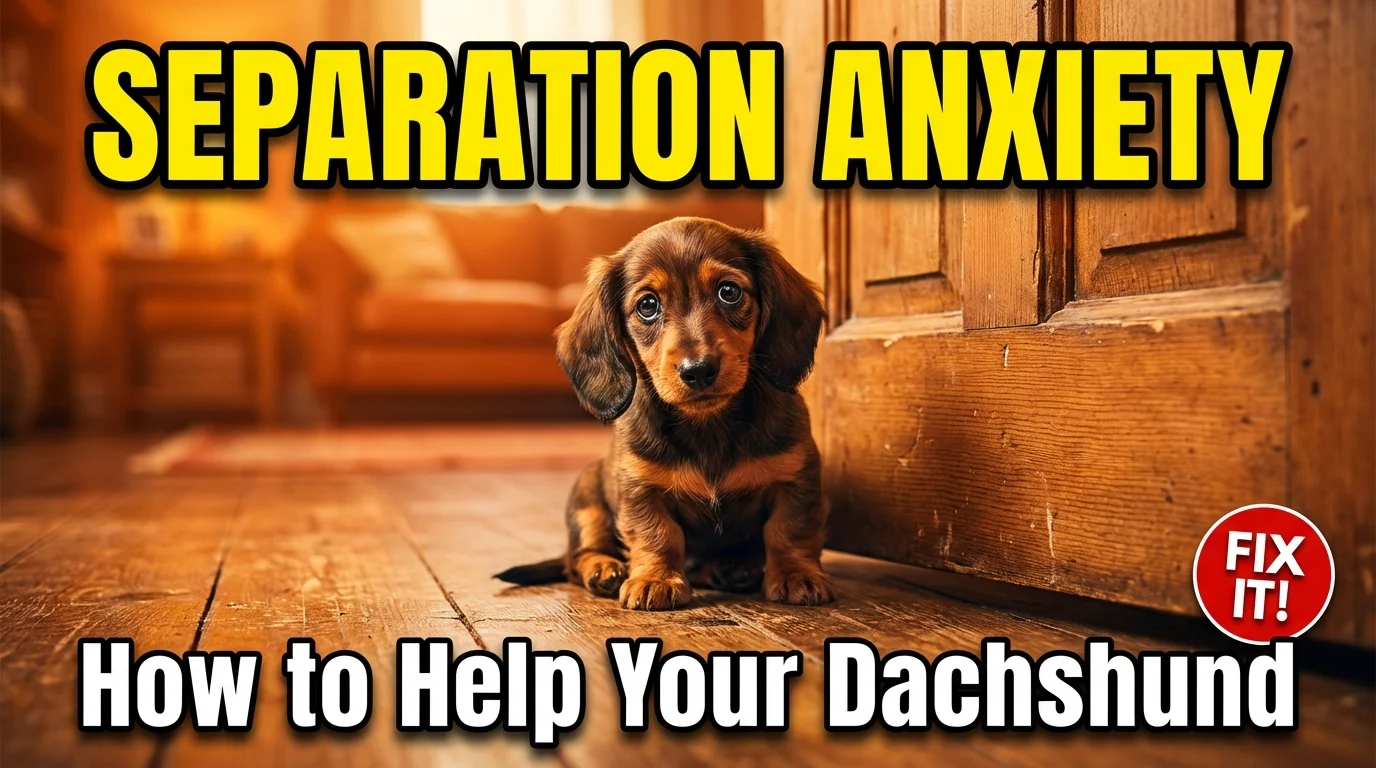
Introduction: Why Your Dachshund Hates Goodbyes
Dachshunds were bred to be tenacious hunters who worked closely with their human partners. This history has forged a breed known for its deep loyalty and affectionate nature. While this makes them incredible companions, it also makes them prone to a condition known as separation anxiety—a genuine panic disorder that occurs when they are left alone.
If you've ever returned home to a scene of destruction or received notes from neighbors about incessant barking, you're not alone. This isn't your Dachshund being 'bad'; it's a cry for help. This article will provide a science-backed, step-by-step guide to understanding and managing your Dachshund's separation anxiety, helping you build their confidence and restore peace to your home.
H2-1: Is It Separation Anxiety? 5 Key Signs in Dachshunds
Separation anxiety is more than just a little whining when you leave. It's a collection of stress-related behaviors that occur exclusively when you're away. Look for these common signs:
- Excessive Vocalization: Barking, howling, or whining that begins shortly after you leave and continues for an extended period.
- Destructive Behavior: Frantic chewing and digging, especially around exit points like doors and windows. Damaged furniture, torn-up pillows, and scratched door frames are common.
- Inappropriate Urination or Defecation: A perfectly house-trained Dachshund having accidents only when left alone is a classic sign of distress.
- Pacing or Restlessness: Some dogs will pace in frantic, repetitive patterns, unable to settle down.
- Escape Attempts: Desperate attempts to get out of a crate or room, which can sometimes result in injury.
H2-2: The Roots of Anxiety: 3 Common Causes
Understanding the 'why' behind the anxiety is crucial for effective treatment. While every dog is an individual, the triggers often fall into these categories:
- Breed Predisposition: As mentioned, their history as companion hunters makes them 'velcro dogs' who can become overly dependent on their owners.
- Change in Routine or Environment: Major life changes like a move, a new work schedule, the loss of a family member (human or pet), or even a vacation can trigger anxiety.
- Past Trauma: For rescue dogs, a history of being abandoned or spending time in a shelter can create a deep-seated fear of being left alone again.
H2-3: A 5-Step Plan to a More Confident Dachshund
Overcoming separation anxiety requires patience, consistency, and a focus on building your dog's confidence. Never punish your dog for anxious behaviors; this will only increase their stress.
Step 1: Create a 'Safe Haven' with Crate Training
The goal is to transform the crate from a prison into a sanctuary. It should be a comfortable den where your dog feels safe and relaxed. Start by feeding meals in the crate and offering high-value treats inside. Never use the crate for punishment.
Step 2: Practice 'Absence' Drills
Start small. Ask your dog to go into their crate, close the door for a few seconds, and then let them out. Gradually increase the duration. Then, practice leaving the room for a few seconds before returning. The key is to return before your dog has a chance to get anxious. This teaches them that you always come back and that being alone is not scary.
Step 3: Make Departures and Arrivals Boring
Dramatic, emotional goodbyes and hellos can fuel your dog's anxiety. About 15 minutes before you leave, start ignoring your dog. When you're ready to go, leave quietly without any fuss. When you return, ignore them until they are calm, then offer a quiet greeting. This downplays the significance of your comings and goings.
Step 4: Turn Alone Time into Fun Time
Provide a special, high-value toy that your dog only gets when you are away. Food-puzzle toys are excellent for this, as they engage your dog's brain and provide a rewarding distraction.

KONG - Classic Dog Toy, Durable Natural Rubber- Fun to Chew, Chase and Fetch
The KONG Classic is the gold standard of dog toys. Its unique, natural red rubber formula is ultra-durable and its erratic bounce is ideal for dogs that like to chew while also fulfilling a dog’s need to play. Stuff it with treats to keep your dog busy for hours.
Step 5: Ensure Adequate Exercise and Mental Stimulation
A tired dog is a calm dog. Ensure your Dachshund gets plenty of physical exercise (respecting their delicate backs, of course) and mental stimulation every day. A long walk or a vigorous play session before you leave can help them relax and sleep while you're gone.
FAQ: Common Questions
Q1. Should I get a pet camera to monitor my dog?
A1. Cameras can be a valuable tool for observing your dog's behavior and confirming if the issue is truly separation anxiety. However, avoid the temptation to talk to your dog through the camera's speaker, as this can often confuse and frustrate them, making the anxiety worse.
Q2. Will getting another dog solve the problem?
A2. This is a common misconception. Separation anxiety is a fear of being separated from a specific person (or people), not just a fear of being alone. While some dogs may find comfort in a canine companion, it's not a guaranteed fix and can sometimes lead to two anxious dogs instead of one.
Q3. When should I consult a professional?
A3. If your dog's anxiety is severe, they are at risk of injuring themselves, or you're not seeing progress after a few weeks of consistent training, it's time to seek help. A certified professional dog trainer, a veterinary behaviorist, or your regular veterinarian can provide guidance and may recommend behavior modification protocols or anti-anxiety medication as part of a comprehensive treatment plan.
Conclusion: Building a Bond of Trust
Helping your Dachshund overcome separation anxiety is a journey that strengthens the bond between you. By replacing fear with confidence and panic with peace, you are teaching your loyal companion that they are safe and loved, even when you're not in sight. Be patient, be consistent, and celebrate the small victories. A calm, independent Dachshund is a happy Dachshund, and a peaceful home is the ultimate reward.