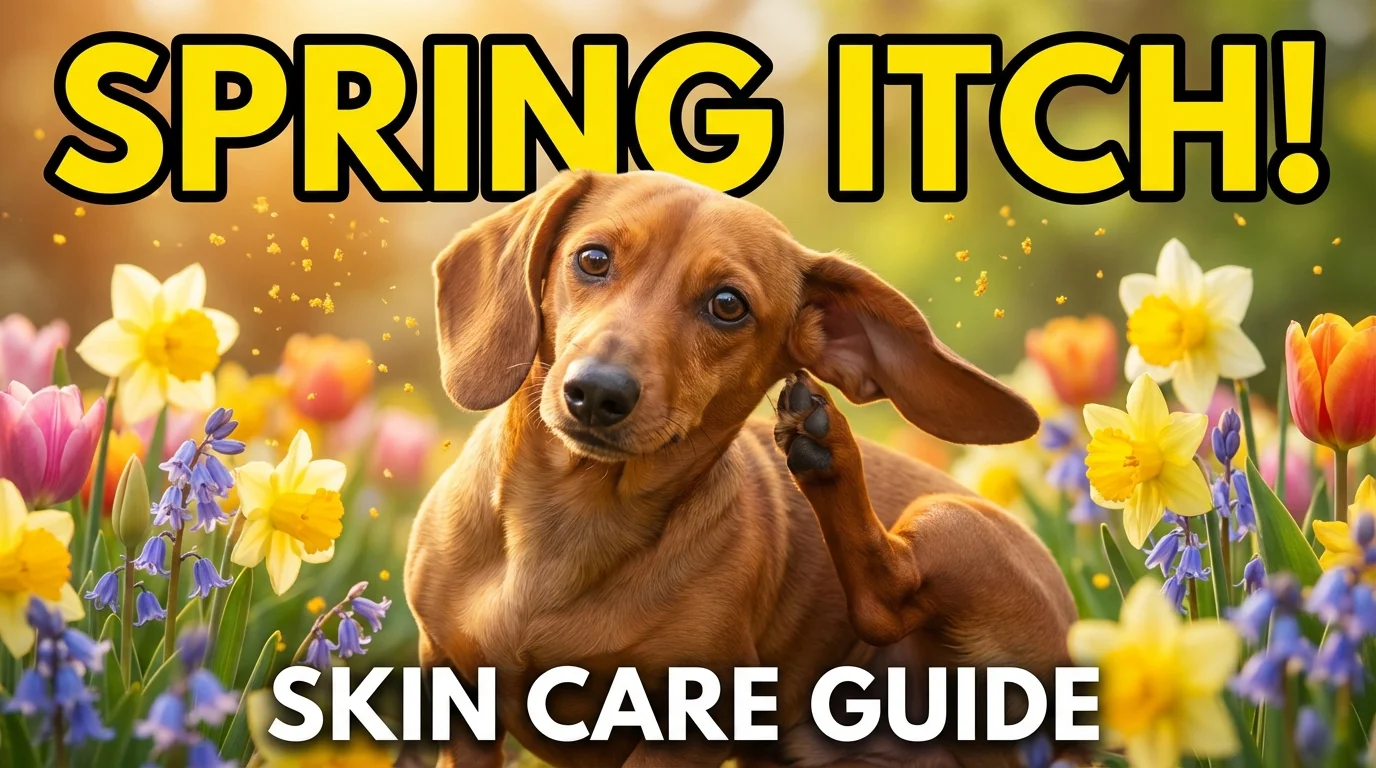
Spring is a wonderful time to enjoy outdoor activities with your dog, as the weather becomes milder and more inviting. However, it is also a season when skin problems in Dachshunds tend to increase significantly. If you notice your dog scratching frequently, chewing on their paws, or rubbing against furniture, it might be an SOS signal from their skin.
Dachshunds, with their dense coats and low-to-the-ground bodies, are particularly susceptible to environmental irritants. This article explores the common causes of spring skin issues from a veterinary perspective and provides practical, effective skin care routines you can implement at home.
3 Main Causes of Spring Skin Issues in Dachshunds
The environmental changes unique to the spring season can have various impacts on a Dachshund's skin. The following are the three primary culprits behind seasonal skin irritation.
1. Allergic Reactions to Pollen and Plants
Just like humans, dogs can suffer from seasonal allergies. During spring, pollen from trees, grasses, and weeds is prevalent in the air. When these allergens come into contact with a dog's skin or are inhaled, they can trigger allergic dermatitis. Furthermore, due to the Dachshund's characteristic short legs and long body, their underbelly and inner thighs are more likely to brush directly against grass and plants during walks. This physical contact increases their risk of developing contact dermatitis compared to taller breeds.
2. Increased Activity of Fleas and Ticks
As temperatures rise in the spring, external parasites such as fleas and ticks become highly active and begin to reproduce rapidly. Bites from these parasites cause severe itching and discomfort. In some cases, dogs can develop Flea Allergy Dermatitis (FAD), a condition where the dog is allergic to the flea's saliva, leading to intense scratching and secondary skin infections. Extra caution is required when walking in areas with tall grass, woods, or parks.
3. Skin Environment Deterioration Due to Shedding
Spring marks the transition from a heavy winter coat to a lighter summer coat. For Dachshunds, particularly the long-haired and wire-haired varieties, the shedding undercoat can easily become trapped within the topcoat. If not removed, this trapped fur reduces air circulation to the skin. Poor ventilation traps moisture and natural oils (sebum) against the skin, creating an ideal breeding ground for bacteria and yeast (such as Malassezia), which can lead to skin infections and unpleasant odors.
Effective Spring Skin Care Routines at Home
Maintaining your Dachshund's skin health requires consistent daily care. Here are effective, vet-approved skin care practices you can easily incorporate into your routine.
Thorough Cleaning After Walks
It is crucial to remove pollen, dust, and plant seeds from your dog's coat and skin immediately after returning from a walk. Use a tightly wrung-out damp towel or hypoallergenic pet wipes to gently clean their paws, underbelly, and face. Pay special attention to the areas between their toes and paw pads, as debris and allergens easily accumulate there.
Regular Brushing to Ensure Air Circulation
To prevent the accumulation of dead hair during the shedding season, daily brushing is essential. Use a slicker brush or a comb appropriate for your Dachshund's coat type to remove the loose undercoat. Brushing not only removes dead hair but also stimulates blood circulation and helps distribute natural oils, keeping the skin healthy. Remember to brush gently to avoid scratching or irritating the skin.
Maintaining Cleanliness with Proper Bathing
Bathing your Dachshund once or twice a month is effective in washing away dirt and allergens from the skin. However, over-bathing can strip the skin of its natural protective oils, leading to dryness and further irritation. Always use a mild, hypoallergenic shampoo specifically formulated for a dog's skin pH.
If your dog is already experiencing redness or itching, consulting a veterinarian for a medicated shampoo recommendation is advisable.
After bathing, thoroughly towel-dry your dog to absorb as much moisture as possible. Then, use a hair dryer on a low or cool setting to completely dry the coat down to the roots. Leaving the coat damp can encourage bacterial and fungal growth.
When to Visit the Veterinarian
If home care does not improve the symptoms, or if you observe any of the following signs, you should seek veterinary attention promptly:
- Severe Itching: The dog is scratching relentlessly, even interrupting their sleep.
- Redness and Swelling: Widespread redness, inflammation, or the presence of rashes and bumps.
- Hair Loss: Localized bald patches or generalized thinning of the coat.
- Foul Odor: A distinct, strong smell coming from the skin or ears.
- Excessive Dandruff: A noticeable increase in flaky skin.
These symptoms could indicate underlying conditions such as atopic dermatitis, severe infections, or hormonal imbalances that require professional medical treatment. Avoid using over-the-counter human medications, as they can worsen the condition. An accurate diagnosis and prescribed treatment plan from a veterinarian are the fastest routes to recovery.
Frequently Asked Questions (FAQ)
Q. Can I use human shampoo on my Dachshund?
A. No, you should never use human shampoo on dogs. Human skin is slightly acidic, whereas a dog's skin is more neutral to slightly alkaline. Human shampoos are too harsh for dogs and can strip away their skin's protective acid mantle, making them vulnerable to severe skin irritation and infections. Always use a shampoo specifically designed for dogs.
Q. When should I start flea and tick prevention?
A. While the traditional peak season for parasites is from early spring to late autumn, many veterinarians now recommend year-round prevention. Due to milder winters and the warm environments inside our homes, fleas and ticks can survive and remain active even during colder months. Consult your veterinarian to choose the most appropriate preventative medication (such as topical spot-ons or oral chewables) for your Dachshund.
Q. What are the symptoms of pollen allergies in dogs?
A. While humans typically experience respiratory symptoms like sneezing and a runny nose, dogs most commonly manifest allergies through "itchy skin." You will often see them obsessively scratching, licking, or chewing their face, ears, armpits, and paws. They may also develop secondary issues like ear infections (otitis externa) as a result of the allergy.
Conclusion
Spring brings an increased risk of skin problems for Dachshunds, but with proactive prevention and proper care, your dog can stay comfortable and healthy.
- Keep them clean by wiping them down after walks and brushing daily.
- Bathe them appropriately using a gentle, dog-specific shampoo.
- Maintain a strict flea and tick prevention schedule.
- Consult a veterinarian early if you notice any persistent skin abnormalities.
Regularly check your dog's skin condition and do not ignore small changes. By maintaining healthy skin, you and your Dachshund can fully enjoy the beautiful spring season together.